The Complete Guide to Gig Economy Taxes (1099-K, 1099-DA, and What You Owe)
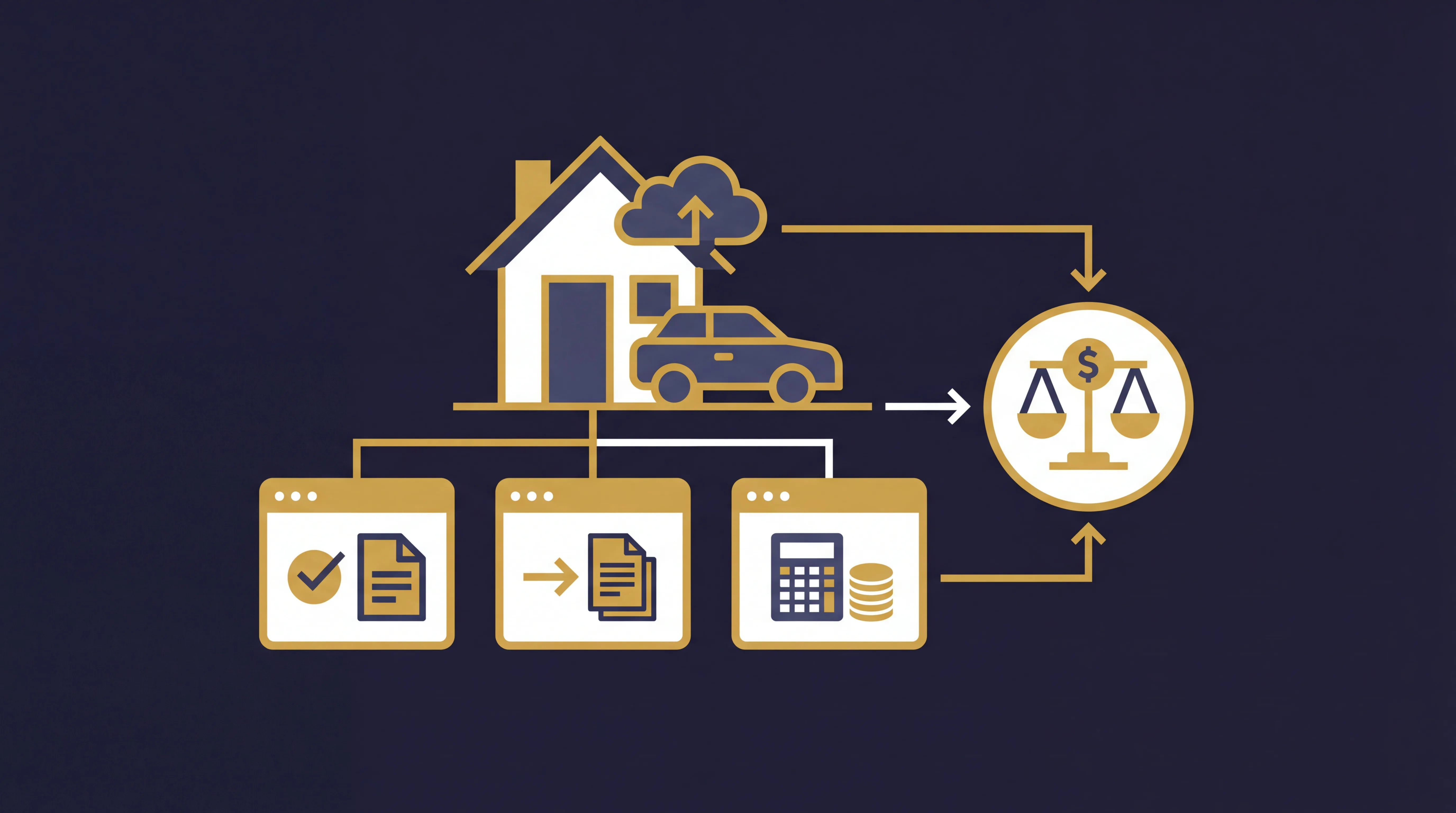
The Complete Guide to Gig Economy Taxes (1099-K, 1099-DA, and What You Owe)
Doing your own taxes as a freelancer or independent contractor can feel like trying to read a different language. When you work a traditional job, your employer handles the heavy lifting. They calculate your taxes, withhold them from your paycheck, and send you a single W-2 form at the end of the year.
When you work for yourself, you are entirely on your own.
You are not alone in figuring this out. According to 2024 Federal Reserve data, more than 64 million Americans engage in freelance or independent work. That is roughly 38 percent of the total U.S. workforce. Millennials lead the way with a 78 percent participation rate, and 55 percent of them rely on independent work as their primary source of income.
Whether you are driving for a delivery app, running a freelance design business, or selling vintage clothes online, the Internal Revenue Service has specific rules for how you report your income. Those rules have changed significantly over the past few years. Here is exactly what you need to know to stay compliant, lower your tax bill, and avoid unpleasant surprises.
The Big 1099-K Rule Change
The most confusing topic in independent tax planning right now is Form 1099-K. This is the form issued by payment processors like PayPal, Venmo, Stripe, and various online marketplaces.
A few years ago, the American Rescue Plan Act lowered the reporting threshold for this form to just $600. This caused massive panic. People selling old furniture or splitting rent with roommates suddenly worried they would face huge tax bills.
Fortunately, recent legislation called the One Big Beautiful Bill retroactively fixed this issue. The IRS announced in late 2025 that the reporting threshold has returned to its previous level. Payment processors are only required to send you a Form 1099-K if you meet two specific conditions. You must receive more than $20,000 in gross payments, and you must have more than 200 individual transactions in a single year.
If you fall below either of those numbers, the platform is not required to send you a 1099-K.
However, this creates a massive blind spot. An Avalara survey from January 2026 found that 74 percent of independent workers could not accurately identify this reporting threshold. Worse, many people assume that if they do not receive a tax form in the mail, they do not owe any taxes.
The IRS is incredibly clear on this point. You must report all income earned from your business activities on your tax return. It does not matter if you receive a Form 1099-K. It does not matter if you were paid in cash. If you provided a service or sold a product for profit, you must report that income.
Another point of confusion involves personal money transfers. Money received from family as a gift, or reimbursements from friends for a shared dinner, is not taxable income. The problem is that payment apps sometimes struggle to tell the difference between a business transaction and a personal reimbursement. You should always keep clear records separating your personal transactions from your business income.
Enter Form 1099-DA for Digital Assets
If your independent work involves cryptocurrency, NFTs, or other digital assets, you have a new form to watch out for. Form 1099-DA is a newly implemented information return designed specifically for digital asset transactions.
Brokers and payment settlement entities use this form to report your digital asset proceeds to the IRS. If you sell digital services and accept cryptocurrency as payment, or if you regularly trade digital assets as part of your business, you might receive both a 1099-K and a 1099-DA.
The rules around digital assets are still being refined by the IRS. If you operate in this space, you need to carefully track your transactions. The IRS warns taxpayers not to report the same transaction twice if it happens to appear on multiple different tax forms.
The Hidden Cost of Working for Yourself
When new freelancers calculate their expected tax bill, they usually focus entirely on federal and state income tax. They often miss the most expensive part of working for themselves. It is called self-employment tax.
Self-employment tax covers your contributions to Social Security and Medicare. The total rate is 15.3 percent. This breaks down to 12.4 percent for Social Security and 2.9 percent for Medicare. You must pay this tax if your net earnings from self-employment are $400 or more for the year.
When you have a traditional W-2 job, you split this cost with your employer. You pay 7.65 percent out of your paycheck, and your employer pays the other 7.65 percent on your behalf. When you are self-employed, you are both the employee and the employer. You have to pay the entire 15.3 percent yourself.
This causes serious sticker shock. Imagine a traditional employee earning $50,000. They have about $3,825 in Social Security and Medicare taxes withheld from their pay. An independent contractor earning that same $50,000 in net profit has to pay the full $7,065 in self-employment tax. That is on top of their regular income tax.
You calculate this tax using Schedule SE when you file your annual return. The good news is that you can deduct the employer-equivalent portion (half of the self-employment tax) when calculating your adjusted gross income. It does not completely offset the cost, but it provides some relief.
How to Stop Guessing with Quarterly Taxes
The United States operates on a pay-as-you-go tax system. Because independent workers do not have taxes automatically withheld from a paycheck, the IRS requires you to make estimated tax payments four times a year.
You are generally required to make quarterly payments if you expect to owe $1,000 or more in federal taxes for the year. Because of the 15.3 percent self-employment tax, you hit that $1,000 threshold very quickly. A net income of just $7,000 for the year is usually enough to trigger the requirement.
The quarterly payment deadlines are strict. For the 2026 tax year, the schedule looks like this:
- April 15 (for income earned January 1 through March 31)
- June 16 (for income earned April 1 through May 31)
- September 15 (for income earned June 1 through August 31)
- January 15 of the following year (for income earned September 1 through December 31)
If you miss these deadlines or underpay, the IRS will charge you penalties and interest. Tax professionals note that the IRS collects billions of dollars annually just from underpayment penalties.
The easiest way to handle this is to calculate a safe percentage of your income to set aside. For most independent workers, saving 30 to 35 percent of every payment you receive will cover both your federal and state tax obligations. If you automate your finances, you can set up your bank account to automatically transfer 30 percent of your deposits into a separate tax savings account.
If you want to guarantee you avoid penalties, you can use the IRS safe harbor rules. As long as your estimated payments equal 90 percent of your current year tax liability, or 100 percent of your prior year tax liability, you will not face underpayment penalties.
Keeping More of Your Money Through Deductions
While independent workers face high tax burdens, the tax code also offers incredible opportunities to lower your taxable income. You only pay taxes on your net profit. Your net profit is your gross income minus your legitimate business expenses.
The IRS states that a business expense must be both "ordinary and necessary" for your specific line of work. An ordinary expense is common in your industry. A necessary expense is helpful and appropriate for your business.
Here are the most common deductions you should be tracking:
Vehicle Expenses: If you drive for work, you can deduct the costs. The IRS allows you to use either the standard mileage rate or actual expenses. For 2025, the standard business mileage rate is 70 cents per mile. If you drive 10,000 miles for your delivery business, that is a $7,000 deduction against your income. You must maintain a detailed mileage log to claim this.
Home Office Deduction: If you use a dedicated part of your home exclusively for business, you can deduct it. The simplified method allows you to deduct $5 per square foot of workspace, up to a maximum of 300 square feet. That is a maximum annual deduction of $1,500.
Health Insurance Premiums: This is a uniquely valuable deduction. Self-employed individuals can deduct the premiums they pay for medical and dental insurance for themselves and their dependents. This reduces your adjusted gross income directly.
Processing Fees and Software: Do not forget to deduct the fees charged by payment platforms. If you earn $50,000 but the platform takes $2,000 in processing fees, that $2,000 is fully deductible. You can also deduct web hosting, accounting software, and professional subscriptions.
Why Retirement Accounts Are Your Best Tax Shield
One of the most effective ways to lower your tax bill is by saving for your own retirement. Traditional W-2 employees are generally limited to contributing $7,500 to an IRA. Independent workers have access to specialized business retirement plans with much higher limits.
The two most common options are the Solo 401(k) and the SEP IRA.
A Solo 401(k) allows you to contribute as both the employee and the employer. Depending on your income, total contributions can exceed $70,000 annually. A SEP IRA allows you to contribute up to 25 percent of your net self-employment compensation, with similar maximum limits.
The tax math here is highly favorable. Traditional contributions to these accounts reduce your taxable income for the year. For a high-earning freelancer, each dollar contributed to a retirement plan can effectively reduce total tax liability by nearly 50 percent when factoring in both income and self-employment taxes.
When to Upgrade Your Business Structure
Most independent workers start as sole proprietors. You simply report your business income and expenses on Schedule C of your personal tax return. It is easy and requires no special paperwork to set up.
However, filing a Schedule C comes with a statistically higher audit risk. According to IRS audit data, Schedule C filers have about a 1 in 50 chance of being audited. By comparison, corporate returns face an audit rate closer to 1 in 400.
If you decide to start a side business and it grows significantly, staying a sole proprietor becomes expensive. Once your net profit consistently exceeds $60,000 a year, you should speak to a Certified Public Accountant (CPA) about electing S-Corporation status.
An S-Corp allows you to split your income into two categories. You pay yourself a "reasonable salary" (which is subject to the 15.3 percent self-employment tax), and you take the rest of your profit as a distribution (which is not subject to self-employment tax). For a freelancer earning $100,000, this strategy can save thousands of dollars a year in taxes.
The Financial Reality of Independent Work
Understanding tax mechanics is only half the battle. The other half is managing the inconsistent cash flow that makes paying those taxes so difficult.
Federal Reserve data highlights the financial vulnerability of independent workers. Only 65 percent of people doing gig work report they are living comfortably financially, compared to 75 percent of traditional employees. Only half of all independent workers maintain emergency savings sufficient to cover three months of expenses.
When your income fluctuates wildly from month to month, a 15.3 percent tax burden feels much heavier. This is why you need to build a $1,000 emergency fund as quickly as possible, specifically to protect your business operations.
You also need to pay attention to how the companies you work with classify you. The U.S. Department of Labor uses an "economic reality test" to determine if a worker should actually be classified as an employee rather than an independent contractor. If a company controls exactly how, when, and where you work, you might be misclassified. This is a major regulatory issue right now, and it directly impacts your access to benefits like unemployment insurance and workers' compensation.
Your One Next Step
If you only do one thing today to improve your tax situation, open a dedicated checking account just for your business. Route every single payment you receive into this account, and pay every business expense out of it.
Mixing personal groceries with business software subscriptions in the same checking account is a nightmare at tax time. A separate account creates a clean, undeniable paper trail of your exact income and expenses. It makes calculating your quarterly payments easier, it protects you in an audit, and it gives you peace of mind.
Your Money. Your Terms.
Get smarter about money
One practical tip per week. No spam, no hype — just clear steps toward financial progress.

Sammy Dynamo
Software Engineer | CS Student | Technopreneur, Dyxium Inc
Related Articles

11 min read
EntrepreneurshipAI Side Hustles: What Data Labeling Actually Pays in 2026
Curious what AI side hustles actually pay? While prompt engineering pays well, most data labeling earns...
Sammy Dynamo
10 min read
EntrepreneurshipContent Creation Side Hustles: Why Median Earners Make $200
Most content creation side hustles pay just $200 a month. Discover what the data actually says...
Sammy Dynamo
11 min read
EntrepreneurshipPassive Income in 2026: What Works for Beginners
Only 20% of U.S. households earn passive income in 2026. Discover what actually works for beginners,...
Sammy Dynamo