High-Yield Savings Rates Drop: Where to Move Your Money
Why Your High-Yield Savings Account Might Be About to Get Worse (And Where to Move Your Money)
If you opened a high-yield savings account a year or two ago, you probably felt pretty good about your decision. Throughout 2024 and early 2025, it was easy to find accounts paying 5.50 percent or more. You could park your cash, do absolutely nothing, and watch a nice interest payment hit your account every month.
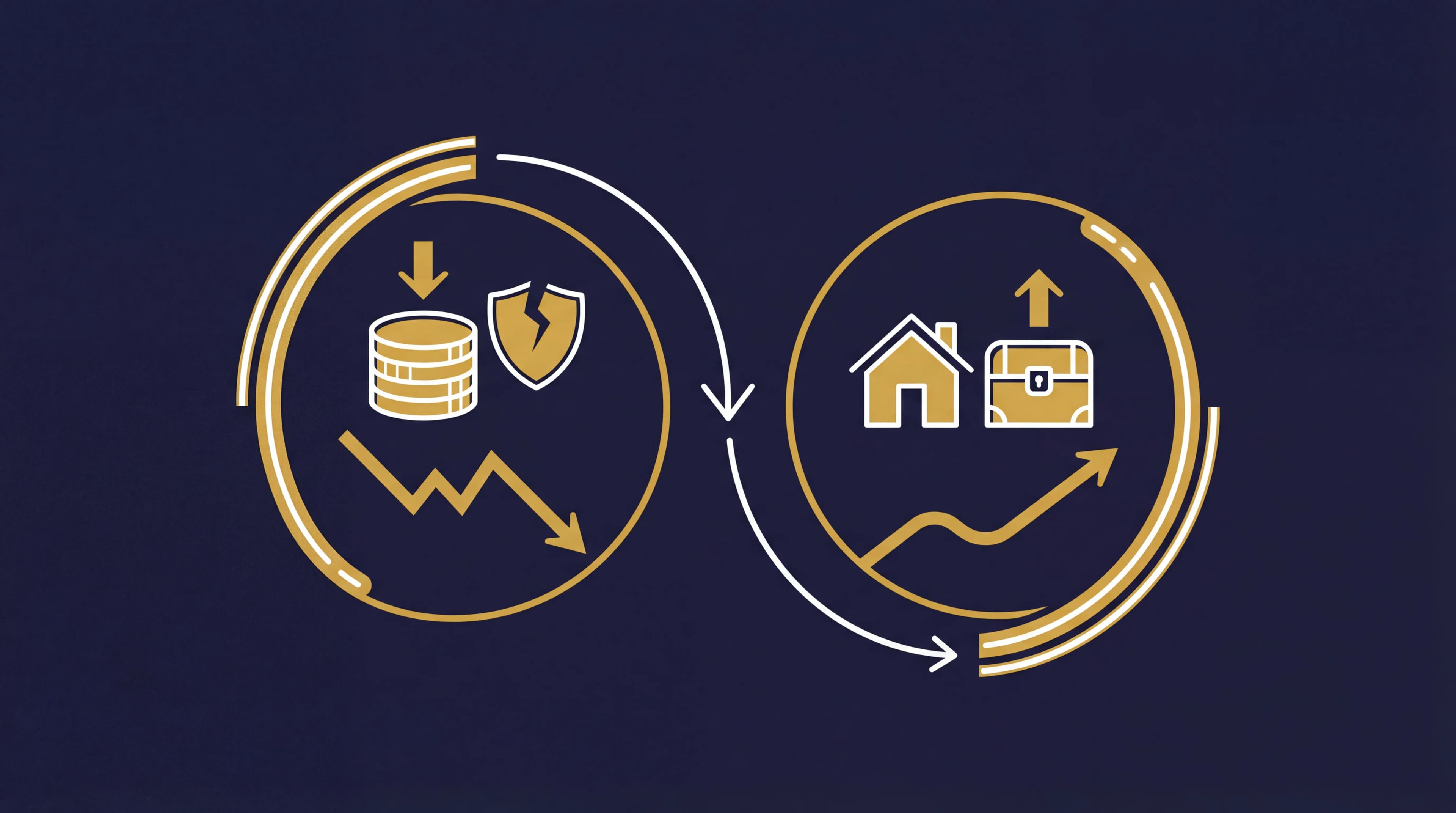
But as of March 2026, the situation is shifting. High-yield savings rates are dropping because the Federal Reserve has cut benchmark interest rates, prompting banks to lower their yields. To protect your returns, you should keep your emergency fund in a high-yield account but move extra cash into CD ladders, Treasury bills, or I-Bonds. For clarity, a high-yield savings account — a deposit account that pays a significantly higher interest rate than traditional banks — is still a vital tool, but it shouldn't be your only one.
Those eye-popping interest rates are quietly fading. While a few outliers like Varo Money still offer up to 5.00 percent APY, major players like Axos Bank and Wealthfront are now clustering around the 4.20 percent mark. This is not a mistake or a temporary dip. It is the result of massive changes in the broader economy.
You do not need to panic, but you do need to pay attention. The strategy of keeping all your extra cash in a single high-yield savings account might not be the most effective move anymore. Here is a look at why your interest rate is likely dropping and exactly where you should consider moving your money next.
Why High-Yield Savings Rates Are Dropping Right Now
Savings rates are dropping directly in response to the Federal Reserve lowering its benchmark interest rate.
To understand why your savings rate is dropping, you have to look at the Federal Reserve. During the final months of 2025, the Federal Reserve cut its benchmark interest rate three consecutive times. This lowered the federal funds rate — the target interest rate set by the Federal Reserve for banks borrowing and lending to each other — by a total of 75 basis points. By January 2026, the Fed decided to pause and hold rates steady at 3.50 to 3.75 percent.
When the Fed cuts rates, banks follow suit. During the peak of inflation, banks were practically begging for your deposits. They needed cash to fund their own lending, so they offered premium interest rates to win your business. That intense competition is officially over.
Banks simply do not face the same pressure to attract new money right now. Deposit flows have stabilized. Because banks have enough cash on hand to meet their lending needs, they have zero motivation to engage in aggressive rate wars. They can lower the interest they pay you without worrying that you will immediately take your money elsewhere.
The forecast for the rest of 2026 is mixed, but most experts agree that rates are not going back up anytime soon. According to J.P. Morgan Global Research (2026), there will be no additional rate cuts this year. On the other hand, according to Bankrate (2026), their senior industry analyst projects three more quarter-point cuts before the end of 2026. According to Goldman Sachs (2026), cuts are expected to arrive in September and December.
The bottom line: The era of effortless 5.50 percent returns is in the rearview mirror, and banks no longer need to offer premium rates to attract your deposits.
The Cost of Leaving Money in Traditional Savings Accounts
Leaving your money in a traditional savings account guarantees that you will lose purchasing power to inflation over time.
Even with rates dropping to around 4.20 percent, high-yield savings accounts are still mathematically superior to traditional bank accounts. Yet a surprising number of people refuse to switch.
According to the FDIC (2026), the national average for a traditional savings account is currently sitting at a dismal 0.39 percent APY. Despite this, according to consumer research (2026), two-thirds of American savers keep the majority of their money in accounts earning less than 4 percent.
Behavioral economists call this "status quo bias." We tend to stick with what we know, even when the math proves we are losing money. Many people simply feel that moving their cash is too complicated. In fact, according to banking surveys (2026), roughly 58 percent of consumers believe they have to close their primary checking account to open a high-yield savings account somewhere else.
That is completely false. You can keep your daily checking account at your local bank while keeping your savings at an online bank that pays a much higher rate. The two accounts can be linked digitally, allowing you to transfer money back and forth in a day or two.
Let us look at the real numbers. If you keep $10,000 in a traditional savings account earning 0.39 percent, you will make about $39 in interest over a year. If you move that same $10,000 to a high-yield account earning 4.20 percent, you will make $420.
That is a difference of $381 for about twenty minutes of setup work.
This difference becomes even more critical when you factor in inflation. According to the Consumer Price Index (2026), inflation is running at 2.4 percent. If your money is earning 0.39 percent, you are actively losing purchasing power every single day. Your money buys less this year than it did last year. An account earning 4.20 percent keeps your cash growing faster than the cost of living.
Here's what this means: Moving your money from a traditional bank to a high-yield account takes twenty minutes but can earn you hundreds of dollars more per year while outpacing inflation.
Why Your Emergency Fund Should Stay in a High-Yield Savings Account
A high-yield savings account remains the absolute best place for your emergency fund because it offers immediate liquidity without withdrawal penalties.
Before we talk about moving your money to new investments, we need to address your financial safety net. Financial planners universally recommend keeping three to six months of essential living expenses in a completely liquid, easily accessible account. For a household spending $4,000 a month, that means keeping $12,000 to $24,000 readily available.
If this describes your emergency fund, leave it in a high-yield savings account.
Even as rates drop to 4.00 or 4.20 percent, a high-yield savings account remains the absolute best place for emergency cash. You do not want your emergency money tied up in the stock market or locked in a restrictive contract. When your car transmission fails or you face an unexpected medical bill, you need cash immediately without paying early withdrawal penalties.
The reality is that most people are dangerously underprepared for these moments. According to Bankrate (2026), only 46 percent of Americans currently maintain enough emergency savings to cover three months of expenses, and a staggering 24 percent of Americans have no emergency savings at all.
Furthermore, according to financial surveys (2026), when an unexpected expense of $1,000 hits, only 30 percent of people can pay for it from their savings. The rest are forced to rely on credit cards, borrow from family, or take out personal loans. If you want to avoid a cycle of debt, building a solid financial safety net must be your first priority.
If you do not have an emergency fund yet, open a high-yield savings account today. Label the account "Emergency Fund" in your banking app. Psychological research shows that giving an account a specific name makes you significantly less likely to raid it for non-emergency purchases.
The bottom line: Even as rates drop, prioritize keeping three to six months of expenses in a liquid high-yield savings account before investing elsewhere.
Lock in Guaranteed Returns With a CD Ladder
Certificates of Deposit (CDs) allow you to lock in a guaranteed interest rate, protecting your savings from future Federal Reserve rate cuts.
Once your emergency fund is fully stocked, you can start looking for better places to park your remaining cash. If you are saving for a specific goal that is six to twelve months away, a Certificate of Deposit (CD) — a savings account that holds a fixed amount of money for a fixed period of time in exchange for a guaranteed interest rate — is highly attractive right now.
When you open a high-yield savings account, the interest rate is variable. The bank can lower it at any time without warning you. When you open a CD, the interest rate is locked in for the entire term.
As of March 2026, top one-year CDs are offering rates around 4.20 percent. While this looks identical to current high-yield savings rates, the CD offers certainty. If the Federal Reserve cuts rates three more times this year, your high-yield savings account might drop to 3.50 percent. Your one-year CD will stay at 4.20 percent until it matures.
The main drawback of a CD is that you cannot touch the money before the term ends without paying a penalty. To get around this, smart savers use a strategy called a CD ladder — a savings strategy where you divide your money across multiple CDs with staggered maturity dates.
Instead of putting all your money into one CD, you divide it up. Let us say you have $12,000 saved for a home down payment that you plan to use next year. You could structure it like this:
- Put $3,000 in a 3-month CD
- Put $3,000 in a 6-month CD
- Put $3,000 in a 9-month CD
- Put $3,000 in a 12-month CD
With this setup, a portion of your money becomes available every three months. If you need the cash, you take it. If you do not need the cash, you can roll it over into a new CD at the current rate.
Here's what this means: A CD ladder gives you the perfect mix of guaranteed interest rates and regular access to your money for short-term financial goals.
Treasury Bills and I-Bonds for Long-Term Savings
For cash you won't need for at least a year, government-backed Treasury bills and I-Bonds offer excellent returns with unique tax advantages and inflation protection.
If you have cash that you absolutely will not need for a year or more, you should look beyond traditional banks entirely. The federal government offers fixed-rate alternatives that provide excellent returns and unique tax advantages.
Treasury bills (T-bills) — short-term debt obligations backed by the U.S. government — are a fantastic option. As of mid-March 2026, a 26-week Treasury bill offers a yield of roughly 3.69 percent. While this is slightly lower than a top-tier CD, T-bills come with a massive perk. The interest you earn is exempt from state and local income taxes. If you live in a state with high income taxes, a 3.69 percent T-bill might actually put more money in your pocket than a 4.20 percent bank account.
How Series I Savings Bonds Protect Against Inflation
For money you can lock away for at least a year, Series I Savings Bonds (I-Bonds) — government bonds specifically designed to protect your money from inflation with a combined fixed and variable interest rate — are another excellent option.
The interest rate on an I-Bond has two parts. The first is a fixed rate that stays the same for the life of the bond. The second is a variable rate that adjusts twice a year based on current inflation.
For I-Bonds issued between November 2025 and April 2026, the composite rate is 4.03 percent. This includes a fixed rate of 0.90 percent plus the inflation adjustment.
There are strict rules for I-Bonds. You cannot cash them in for the first year. If you cash them in before five years, you lose the last three months of interest. But if you are saving for a long-term goal like a wedding or a future vehicle replacement, I-Bonds offer a federally backed way to ensure your savings outpace inflation.
The bottom line: Government bonds provide a federally backed way to ensure your long-term savings outpace inflation, often with significant tax benefits.
How to Adjust Your Savings Strategy This Week
Protecting your returns requires auditing your current accounts, identifying your timeline, and moving your money into the appropriate savings vehicles.
Knowing about dropping interest rates does not help you unless you actually change where your money lives. You do not need to spend days analyzing the market. You just need to take a few deliberate steps to protect your returns.
First, take thirty minutes to audit your current accounts. Log into your bank and locate your exact Annual Percentage Yield (APY). If your money is sitting in an account earning less than 4.00 percent, you are leaving free money on the table.
Second, identify your timeline. Separate your cash into three mental buckets.
- Money you need right now (checking account).
- Money you might need for an emergency (high-yield savings account).
- Money you will not need for at least six months (CDs or Treasury bonds).
Third, make the transfer. Opening a new account at a reputable online bank takes about fifteen minutes. You will need your social security number, your driver's license, and the routing number for your current checking account.
Finally, set up an automated system. Behavioral research shows that people who automate their savings are significantly more successful than those who try to move money manually each month. You can easily automate your finances in one afternoon by setting up a direct deposit rule with your employer. Have a specific percentage of your paycheck sent directly to your high-yield savings account or investment platform before you ever see it.
The financial environment of 2026 is different than it was two years ago. The banks are no longer fighting for your deposits, and the easy returns are starting to shrink.
Here's what this means: By matching your savings vehicles to your specific timelines and automating your transfers, you can effortlessly protect your cash from dropping rates.
Common Questions
Why are high-yield savings rates dropping?
High-yield savings rates are dropping because the Federal Reserve has lowered its benchmark interest rate. When the Fed cuts rates, banks no longer need to offer premium yields to attract customer deposits, so they lower the APY on their savings accounts.
What is the best alternative to a high-yield savings account?
The best alternative to a high-yield savings account depends entirely on your timeline. For short-term goals, Certificates of Deposit (CDs) lock in guaranteed rates, while Treasury bills and I-Bonds are excellent for long-term cash you won't need for over a year.
How much money should I keep in my high-yield savings account?
You should keep three to six months of essential living expenses in a high-yield savings account to act as your emergency fund. Any extra cash beyond this safety net should be moved to higher-yielding or fixed-rate investments like CDs or government bonds.
When will savings interest rates go back up?
Savings interest rates are not expected to go back up significantly in 2026. Most financial experts project that the Federal Reserve will either hold rates steady or implement further rate cuts throughout the year, meaning savings yields will likely continue to slowly decline.
Your One Next Step
Log into your primary banking app right now and find the exact interest rate on your savings account. If it is below 4.00 percent, take fifteen minutes today to open a high-yield savings account with a reputable online bank and transfer your emergency fund over. Your Money. Your Terms.
Listen to this article
Get smarter about money
One practical tip per week. No spam, no hype — just clear steps toward financial progress.

Sammy Dynamo
Software Engineer | CS Student | Technopreneur, Dyxium Inc
Related Articles
11 min read
Saving & InvestingSave for a House Down Payment While Paying High Rent
Learn how to save for a house down payment while paying high rent. Discover the real...
Sammy Dynamo
11 min read
Saving & Investing3-Month Emergency Fund Dead? How to Save for 12 Months
The traditional 3-month emergency fund is failing young professionals. Discover why you need a 12-month safety...
Sammy Dynamo
12 min read
Saving & InvestingCash vs Investing in 2026: When to Pause
Debating cash vs investing in 2026? With 24% of Americans holding zero emergency savings, pausing contributions...
Sammy Dynamo