Subscription Fatigue Is Costing Gen Z $120/Month: Your 15-Minute Audit Script
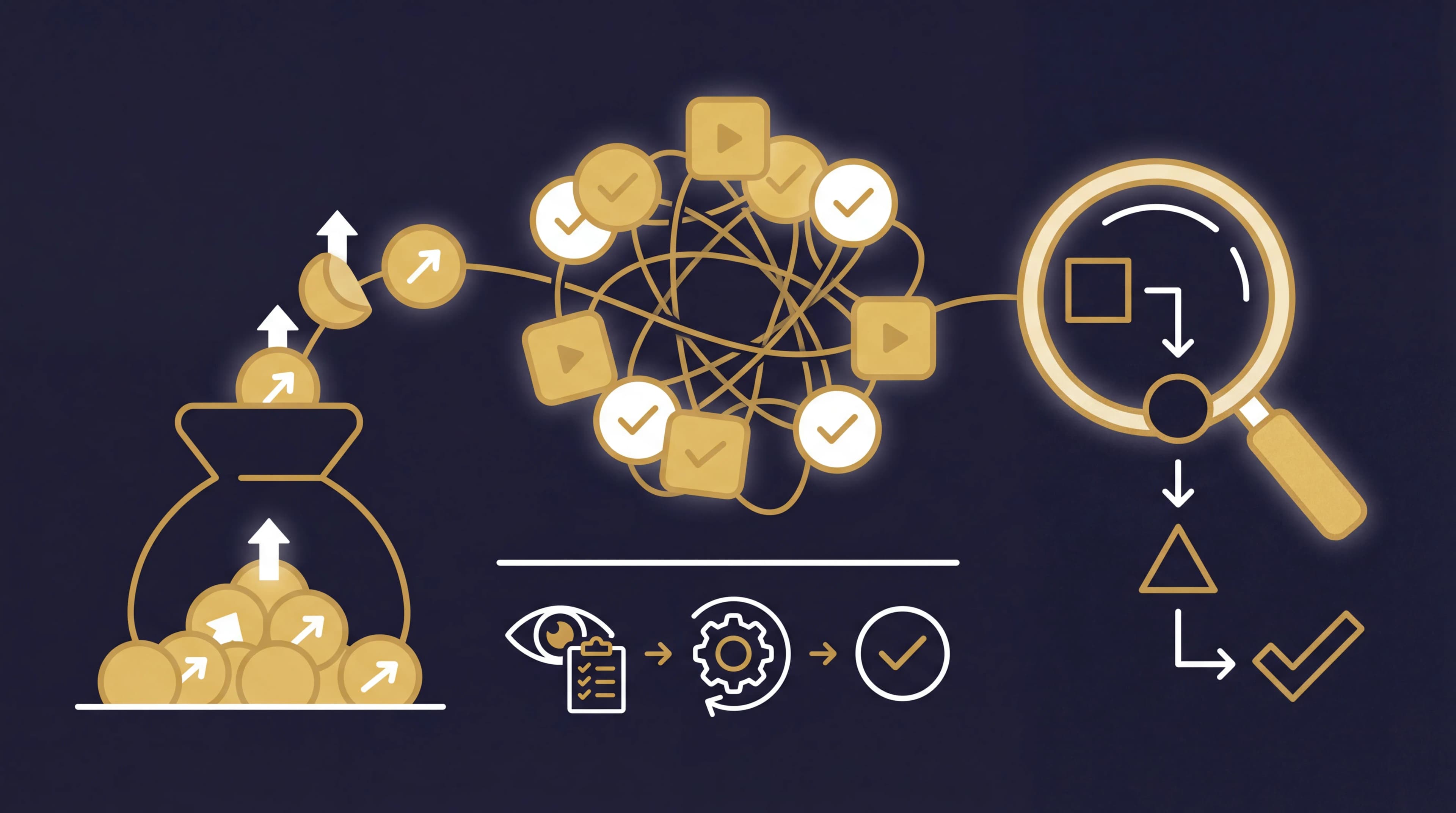
title: Subscription Fatigue: Gen Z's 15-Minute Audit Script
slug: subscription-fatigue-gen-z-audit
excerpt: Subscription fatigue costs Gen Z hundreds in hidden monthly fees. Ready to stop the invisible drain? Use our 15-minute audit script to take back control.
category: mindful-spending
tags: [budgeting, hidden-costs, financial-habits, money-management]
featured_image: subscription-fatigue-gen-z-audit.jpg
internal_links:
- /posts/build-first-budget-30-minutes
- /posts/build-1000-emergency-fund
- /posts/spend-less-without-feeling-deprived
- /posts/manage-financial-anxiety
Subscription Fatigue Is Costing Gen Z $120/Month: Your 15-Minute Audit Script
Subscription fatigue — the mental and financial exhaustion of managing too many recurring monthly charges — is quietly draining bank accounts. Ask someone what they spend on subscriptions every month, and they'll probably guess around $86. But when researchers actually sit down and tally up the receipts, the real number averages $219.
That massive gap between what we think we spend and what actually leaves our bank accounts is one of the biggest blind spots in modern personal finance. According to C+R Research (2022), consumers underestimate their subscription spending by 2.5 times, guessing $86 when the reality is $219. It shows just how invisible recurring charges have become.
For young adults, the numbers are even more intense. According to Visa (2024), Gen Z consumers in the UK spend the equivalent of about $382 monthly on subscription services. Over in the United States, according to Bango (2024), Gen Z's annual subscription spending hits roughly $940 per year on core services alone.
This isn't just about having Netflix and Spotify anymore. We're paying for meal kits, meditation apps, plant deliveries, and even premium social media features. It adds up quickly.
If you feel overwhelmed by the sheer number of small monthly charges hitting your checking account, you're not alone. Let's look at why these costs accumulate so easily and how you can take back control of your cash flow.
The bottom line: Subscription fatigue is a costly blind spot, but a quick 15-minute audit can instantly recover over $100 a month.
The Psychology Behind the Subscription Trap
The subscription economy is intentionally designed to make signing up frictionless and canceling exhausting. It's easy to blame a lack of discipline for a bloated monthly credit card statement, but that ignores the reality of how these services are built.
Behavioral economists have found a few specific reasons why we keep paying for things we don't use. The first is the sunk cost fallacy — the psychological pressure to continue an endeavor once an investment in money, effort, or time has been made. According to behavioral researchers (2023), members spent an average of $43.16 per month post-subscription compared to just $3.93 for non-members. Only a third of that extra spending came from actual economic benefits. The rest was driven purely by the psychological need to justify being a member.
Then there's decision fatigue — the deteriorating quality of decisions made by an individual after a long session of evaluating options. The average consumer manages 5.6 active subscriptions. For media and entertainment alone, that number can jump to 12 different services. Evaluating whether each one still provides value takes mental energy. When you're tired after a long day of work, deciding whether to cancel a $9.99 streaming service feels like too much effort. So, you let it ride for another month.
This creates a perfect storm for managing financial anxiety. You know you're spending too much, but the thought of untangling the mess feels worse than simply ignoring it.
Here's what this means: You aren't just battling bad habits; you are fighting psychological triggers designed to keep you paying for things you don't use.
Why You Can't Just "Remember to Cancel" Your Subscriptions
Companies actively rely on human inertia and deceptive design to maintain their recurring revenue. The subscription industry relies heavily on status quo bias — our human tendency to stick with the current state of affairs unless forced to change. Companies know this, which is why automatic renewal is the default setting everywhere.
But it goes deeper than human psychology. Many companies actively use dark patterns — deceptive user interface designs intended to trick users into doing things they might not want to do, like keeping a subscription active. According to the Federal Trade Commission (2024), 76 percent of subscription services used at least one deceptive design practice to make cancellation difficult.
These practices include hiding the cancellation button deep in account settings. Sometimes they require you to call customer service during specific hours. Other times, they force you to click through multiple screens of guilt-trip messaging.
The problem has become so severe that the federal government stepped in. According to the FTC (2024), the agency received nearly 70 consumer complaints per day about recurring subscriptions. That was a massive jump from 2021. In response, the FTC finalized a "click-to-cancel" rule. This regulation requires sellers to make canceling a service exactly as easy as signing up for it.
The bottom line: Until "click-to-cancel" regulations are universally enforced, the burden of navigating these dark patterns falls entirely on you.
The Myth of the "Cheaper Than Cable" Streaming Era
The fragmented streaming market has officially made digital subscriptions just as expensive as the traditional cable bundles they replaced. One of the biggest misconceptions keeping us subscribed is the outdated idea that streaming saves money.
That narrative made sense a decade ago when one $8 platform had almost every show you wanted to watch. Today, the market is completely fragmented. To watch your favorite shows, you might need five different platforms.
Prices have also skyrocketed. According to DepositAccounts (2023), the average cost of a digital subscription has gone up 19 percent since 2020. Some services have seen massive hikes. Disney+ ad-free jumped 116.9 percent from $8.75 to $18.99. Apple TV+ doubled from $6.25 to $12.99.
When you combine Netflix, Amazon Prime, Hulu, Disney+, and a few others, your monthly bill easily crosses $100. That doesn't even factor in music streaming, fitness apps, or software. You're no longer saving money compared to cable. You've just rebuilt the cable bundle with different logos and higher stress levels.
Understanding this shift is critical if you want to learn how to spend less without feeling deprived. You don't need to cut out entertainment entirely. But you do need to recognize when a service is no longer delivering the value it promised.
Here's what this means: You've likely rebuilt the expensive cable bundle with different logos, making it crucial to audit your services regularly.
What $120 a Month in Subscription Fatigue Costs Your Future
Wasting $120 a month on unused subscriptions robs you of significant long-term wealth and immediate financial security. A real-world audit often reveals about $120 a month in completely unused or forgotten subscriptions. For a young professional earning $40,000 to $50,000 after taxes, $120 represents a meaningful percentage of monthly take-home pay.
When you look at the long-term math, the numbers get uncomfortable. A typical middle-income household spends around $4,200 a year on recurring subscriptions. Let's say you took just $350 a month (the median household subscription spend). If you invested it in the stock market at a 7 percent annual return, you'd have about $182,000 over 20 years.
That isn't just pocket change. That's a down payment on a house. That's years of early retirement.
More immediately, this invisible spending directly impacts your daily financial security. According to Bank of America (2025), 55 percent of Gen Z respondents don't have enough emergency savings to cover three months of expenses. Over half said the high cost of living is a barrier to their financial success.
It's incredibly difficult to build a safety net when you're bleeding cash to apps you forgot you downloaded. Freeing up that $120 a month is one of the fastest ways to build a $1,000 emergency fund.
The bottom line: Reclaiming that $120 a month from forgotten apps is the fastest way to fund your financial safety net.
Why Subscription Tracking Apps Aren't the Answer
Relying on third-party apps to manage your subscriptions often introduces new costs and security risks rather than solving the root problem. When people realize they have a subscription problem, their first instinct is often to download an app to fix it. According to Forrester (2023), 47 percent of banking customers want subscription management tools built into their banking experience.
While these tools can be helpful for visibility, they aren't a magic fix. In fact, many subscription tracking apps eventually require a paid subscription themselves. Adding another recurring charge to manage your recurring charges isn't the solution.
Plus, automated cancellation services often require you to hand over your bank login credentials. This introduces unnecessary privacy and security risks.
Technology can't make intentional financial decisions for you. The real solution requires a brief but focused manual review of your spending. You need to look at your own numbers and decide what actually adds value to your life.
Here's what this means: Technology can highlight the problem, but only a manual review can help you make intentional decisions about what adds value to your life.
The 15-Minute Subscription Audit Script
A manual subscription audit is the most effective way to identify and eliminate unwanted recurring charges in just 15 minutes. You don't need to spend an entire weekend untangling your finances. Think of this as the essential first step before you build your first budget.
Here's exactly how to do it.
Step 1: Gather Your Statements (Minutes 1-5)
Don't rely on your memory. According to Bankrate (2023), 51 percent of adults have incurred unwanted charges, like free trials that converted without permission. You'll only spot these if you look at the raw data.
Pull up the last three to six months of statements for your checking account and your primary credit cards. You must look back at least three months because many subscriptions charge quarterly or annually. If you only check last month's statement, you'll miss the $119 annual software renewal waiting to hit you next week.
Check your digital wallets too. Look at your Apple Pay, Google Pay, PayPal, and Venmo histories. Subscriptions love to hide in alternative payment methods.
Step 2: Make the Master List (Minutes 5-10)
Open a blank document or grab a piece of paper. Go line by line through your statements and write down every single recurring charge.
Record the name of the service, the cost, and how often it charges you. You'll likely find things you completely forgot about. According to C+R Research (2022), 42 percent of people admitted they stopped using a service but forgot they were still paying for it. Gen Z was the most likely group to make this mistake.
Don't judge the spending yet. Right now, you're just collecting data. Seeing the total monthly number written down in one place is usually the wake-up call you need.
Step 3: The 30-Day Test (Minutes 10-15)
Now look at your master list. For every single item, ask yourself one question.
"Did I use this in the last 30 days?"
If the answer is no, cancel it immediately. Don't tell yourself you'll use it next month. Don't keep it just in case. If you haven't touched it in a month, it's draining your wealth.
If you're on the fence about a service, cancel it anyway. If you truly miss it, you can always sign up again in five minutes. The friction of having to sign up again is usually enough to prove you never really needed it in the first place.
For the subscriptions you decide to keep, check if you can downgrade the tier. Do you really need the premium 4K ad-free version of that streaming app, or would the basic tier work just fine?
According to NerdWallet (2026), 55 percent of Americans plan to significantly decrease their subscriptions this year to save money. By completing this audit, you're putting yourself ahead of the curve.
The bottom line: By systematically reviewing your statements and applying the 30-day test, you can instantly stop the financial drain.
Moving Toward Mindful Spending
Mastering subscription management is a foundational step toward aligning your daily spending with your long-term values. Financial planners recognize subscription management as a core part of modern financial literacy. According to the CFP Board (2026), 65 percent of Gen Z college students want to learn more about personal finance as they enter the workforce. Managing recurring expenses is one of the most practical places to start.
The goal here isn't to strip all the joy out of your life. If a $15 monthly music subscription brings you daily happiness, keep it. That's money well spent.
The goal is mindful spending — consciously aligning your money with your actual values and goals. It means moving your financial life off autopilot. When you stop paying for things you don't use, you suddenly have the cash flow to fund the things you actually care about.
Your money should serve your current life, not the ghost of a free trial you forgot to cancel three years ago.
Here's what this means: Canceling unused subscriptions isn't about deprivation; it's about freeing up cash flow for the things you genuinely care about.
Common Questions
What is subscription fatigue?
Subscription fatigue is the mental and financial exhaustion that comes from managing too many recurring monthly charges. It occurs when consumers feel overwhelmed by the sheer volume of small, automated payments draining their bank accounts.
How much does the average person spend on subscriptions?
The average consumer spends about $219 per month on subscription services, despite believing they only spend around $86. For Gen Z, this hidden spending can easily exceed $300 a month when factoring in media, apps, and physical deliveries.
Why is it so hard to cancel subscriptions?
Companies often use deceptive user interface designs, known as dark patterns, to make the cancellation process intentionally difficult. These tactics include hiding cancellation buttons, requiring phone calls, or using guilt-trip messaging to exploit our natural status quo bias.
How often should I audit my monthly subscriptions?
You should perform a 15-minute subscription audit every three to six months to catch quarterly renewals and forgotten free trials. Regularly reviewing your bank and credit card statements ensures you only pay for services you actively use.
Your One Next Step
Open your phone right now, set a timer for 15 minutes, and log into your primary bank account to start Step 1 of the audit script. Don't wait for the perfect time. Find your master number today, and take back control of your monthly cash flow.
Your Money. Your Terms.
Listen to this article
Get smarter about money
One practical tip per week. No spam, no hype — just clear steps toward financial progress.

Sammy Dynamo
Software Engineer | CS Student | Technopreneur, Dyxium Inc
Related Articles
10 min read
Mindful Spending2026 Car Tax Deduction: A Math Reality Check
Thinking of buying a car for the 2026 tax deduction? With average ownership costs hitting $12,297...
Sammy Dynamo
11 min read
Mindful SpendingCost of Raising a Child in 2026: A Financial Guide
The cost of raising a child in 2026 exceeds $303,000. Discover where the money goes and...
Sammy Dynamo
13 min read
Mindful SpendingSaying No to Expensive Weddings: Money Boundaries
Struggling with the cost of being a guest? Learn how saying no to expensive weddings and...
Sammy Dynamo