Buy or Rent in 2026? The Real Math Explained
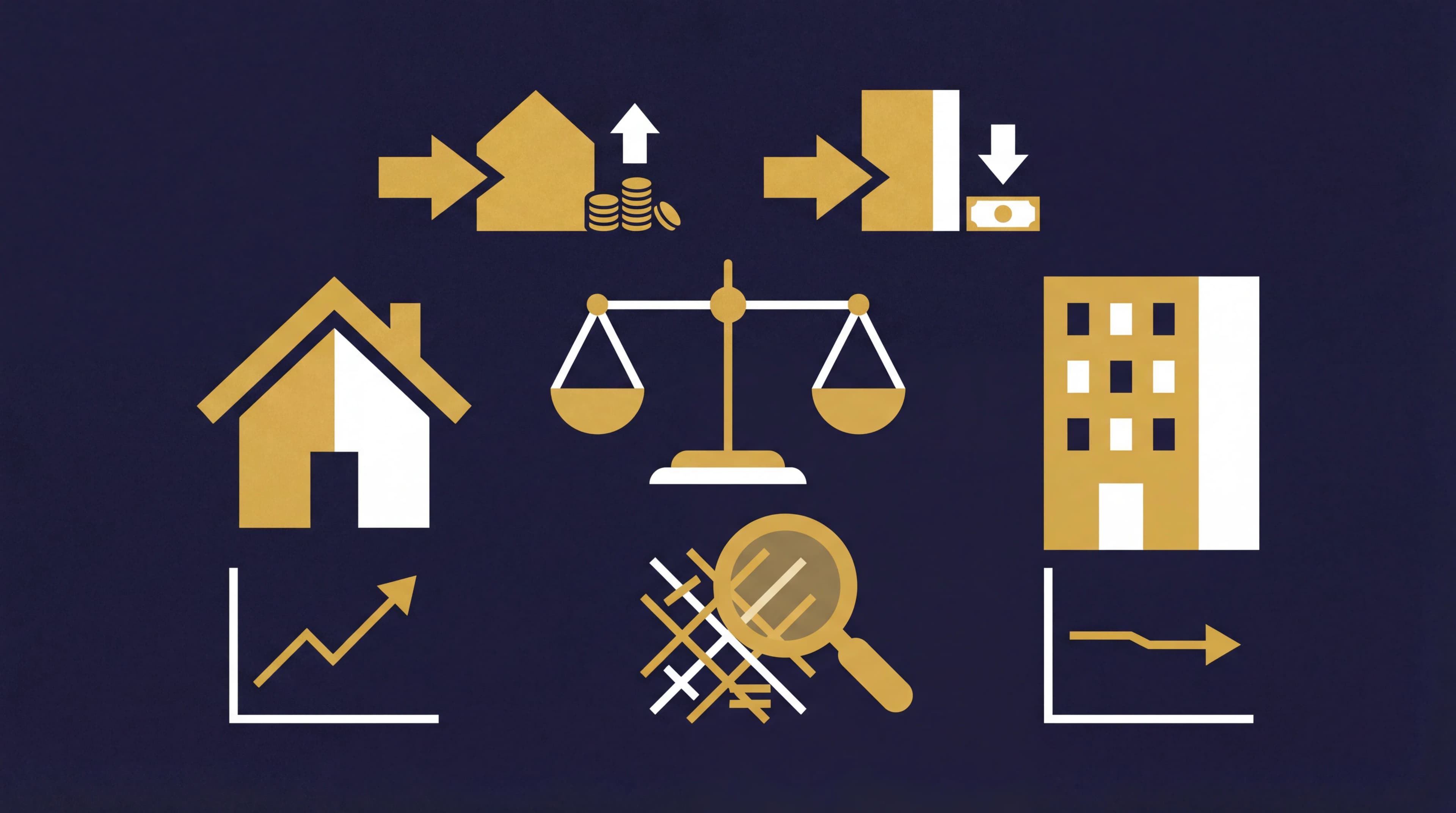
Buy or Rent in 2026? The Real Math Explained
"Stop throwing your money away on rent."
You've probably heard this advice from parents, older colleagues, or well-meaning friends. For decades, buying a house was the ultimate financial goal for any responsible adult. The standard life script dictated that you graduate, get a job, save a down payment, and buy property as soon as humanly possible.
But the math has fundamentally changed. Should you buy or rent in 2026? For most Americans, renting and strategically investing the monthly savings is now mathematically superior to buying a home, due to record-high housing costs and elevated mortgage rates.
Choosing whether to rent or buy is a massive financial choice. But the current economy looks very different from what previous generations faced. High home prices, elevated mortgage rates, and massive hidden costs mean the old rules of real estate no longer apply. Let's break down the actual numbers behind the rent-versus-buy decision so you can make the right choice for your own life.
The 2026 Housing Market: Why Renting is Cheaper
The housing market in 2026 faces a severe affordability crisis where renting is significantly cheaper than buying in almost every major market.
As of March 2026, the median home sale price in the United States stands at approximately $405,300. At the same time, the 30-year fixed-rate mortgage averages 6.38%. When you combine those two numbers and add in property taxes and insurance, the median monthly mortgage payment easily exceeds $2,000.
Meanwhile, according to the Federal Reserve (2026), the median monthly rent across the country sits between $1,200 and $1,607, depending on the exact metric and region used. This creates a massive monthly gap between renting and owning.
Housing affordability has dropped 35% below its pre-2020 levels. This is largely reflected in the price-to-income ratio — a metric that measures how much houses cost compared to what people actually earn. This ratio has soared to historic highs. In many coastal cities, a median home costs more than 10 times the median annual income.
Because of this, homeownership has become heavily divided by income. Among adults making over $100,000, the homeownership rate is 85%. For those earning under $50,000, it is just 35%. The first-time homebuyer share of the market recently fell to a historic low of 21%. Also, the median age of a first-time buyer has climbed to an all-time high of 40 years old.
The bottom line: The massive gap between median rents and mortgage payments has made renting the more affordable monthly option for most Americans.
The True Cost of Homeownership vs. Renting
The true cost of homeownership extends far beyond the monthly mortgage payment, often adding thousands in hidden annual expenses.
One of the biggest mistakes potential buyers make is focusing only on the monthly mortgage payment. They compare a $1,800 rent payment to a $1,800 mortgage and assume they are financially identical. They aren't. Your rent is the absolute maximum you will pay for housing in a given month. Your mortgage is the absolute minimum.
According to Bankrate (2026), the average annual cost of owning and maintaining a single-family home in the United States reached $21,400. That is completely separate from your principal and interest payments. This figure includes:
- Property taxes averaging $4,316 nationally
- Homeowners insurance averaging $2,267 annually
- Utilities and energy costs averaging $4,494
- Home maintenance costs averaging $8,808 per year
The Silent Budget Killer: Home Maintenance
That maintenance number is the silent budget killer. Older homes require constant upkeep. The standard industry guideline suggests budgeting 1% of your home's value annually for maintenance. For a $405,000 home, that means setting aside $4,050 every year just to keep the place running. And that is just an average. If your roof leaks or your HVAC system dies, that number can double overnight.
If you are not prepared for these expenses, you might face serious financial stress. You can read about similar struggles in our guide on navigating the hidden costs of your first apartment.
Financial advisors generally recommend adding about 40% to your base mortgage payment to account for taxes, insurance, and maintenance. So, a basic $1,500 mortgage payment actually translates to a true housing cost of roughly $2,100 a month.
Then there is the barrier of the down payment. The median down payment recently hit $30,400, which is a 118% increase from 2019. Closing costs typically add 2% to 5% of the loan amount. That means you are looking at another $8,000 to $20,000 in upfront cash just to get the keys.
Here's what this means: When you factor in taxes, insurance, and maintenance, your true housing cost will be significantly higher than your base mortgage payment.
Mortgage Debt Limits and Generational Roadblocks
Strict mortgage debt limits and existing student loans are actively preventing an entire generation from qualifying for median-priced homes.
Even if you have the cash saved, getting approved for a mortgage is harder than it used to be. Lenders look closely at your debt-to-income (DTI) ratio — the percentage of your gross monthly income that goes toward paying your monthly debt. Fannie Mae typically caps your maximum DTI at 36% of your gross income.
Let's look at a realistic example. Imagine a household earning $80,000 a year (roughly the national median). A 36% DTI threshold means your total monthly debt payments cannot exceed $2,400.
If you have $500 in student loan payments, a $300 car payment, and $100 in minimum credit card payments, you only have $1,500 left for a mortgage. At a 6.38% interest rate with a 10% down payment, that $1,500 only qualifies you for a home priced around $260,000. That is nearly $150,000 below the national median home price.
This mathematical reality perfectly explains why student debt is such a massive roadblock. According to recent financial research (2026), 27% of college graduates report their student loans delayed them from buying a home by an average of 10 years. If you are navigating this exact situation, learn how upcoming student loan changes impact your budget.
The bottom line: High debt-to-income ratios, driven largely by student loans, are mathematically locking average earners out of the median housing market.
The Rise of the High-Income Lifestyle Renter
A growing demographic of high-income earners is deliberately choosing to rent for lifestyle flexibility and financial optimization.
An outdated assumption says people only rent because they cannot afford to buy. The data says otherwise. We are seeing a massive rise in "lifestyle renters." Between 2019 and 2023, the number of renter households earning more than $100,000 annually grew by 52% across major U.S. cities. For comparison, the overall population only grew by 32% in those areas.
These high-income individuals are deliberately choosing to rent. According to the Federal Reserve (2026), 58% of surveyed renters said renting is more convenient or flexible than owning. Another 47% cited renting as less financially risky. Meanwhile, 46% said it was simply cheaper than owning in their area.
Renting allows you to live in neighborhoods with amenities that might be completely unaffordable if you tried to buy there. It also gives you the flexibility to move for a better job opportunity without the stress of selling a house.
Here's what this means: Renting is no longer just a stepping stone; it is a strategic lifestyle choice for high earners seeking flexibility and lower financial risk.
The Investment Math: When Renting Beats Buying
Renting beats buying financially when you take the money saved on down payments and maintenance and invest it in the stock market.
The most stubborn myth in personal finance is that renting is "paying someone else's mortgage" and therefore a complete waste of money. This ignores the massive opportunity cost of tying up your cash in real estate.
Let's look at a detailed math scenario from recent personal finance research. Imagine buying a $400,000 home. Over 30 years, the total interest, property taxes, insurance, and loan costs could easily reach $562,400. That is money you never get back. Add in $120,000 for maintenance over three decades. Your total unrecoverable costs sit at $682,400. Even if the home appreciates to $1.3 million, your actual profit after expenses is around $617,000.
The Opportunity Cost of a Down Payment
Now, look at the renter's alternative. Suppose a renter takes the $41,000 they would have spent on a down payment and closing costs, and invests it in the S&P 500. Then, instead of paying $4,000 a year in home maintenance, they invest that money too. Based on historical stock market returns of around 10%, that portfolio would grow to approximately $2,045,000 in 30 years. That yields over $1.8 million in total profit.
That is three times the profit of the homeowner.
This strategy requires serious discipline. You actually have to invest the difference. If you rent and spend your extra cash on takeout and clothes, the homeowner will absolutely end up wealthier than you. But if you automate your investments, renting can be incredibly lucrative. If you are new to this concept, learning how to start investing with index funds is your best first step.
According to Axios (2026), renting is currently cheaper than owning in all 100 of the largest U.S. metropolitan areas. Homeowners with mortgages spend about 37% more per month compared to renters. In cities like San Francisco or New York, owning costs 75% more per month than renting. Even in more affordable regions like Phoenix or Orlando, renting remains about $200 less expensive each month.
The bottom line: If you diligently invest the money you save by not paying a down payment and home maintenance, renting can generate significantly more wealth than owning.
The 10-Year Break-Even Problem for Homebuyers
Because of high interest rates and closing costs, modern homebuyers now need to stay in their homes for up to a decade just to break even.
There used to be a standard "five-year rule" in real estate. The idea was simple. If you lived in a house for five years, the property value would go up enough to cover your buying and selling costs.
In 2026, that rule is dead. Home prices are now appreciating at a slower 3.8% annual pace. High mortgage rates and steep closing costs eat up 8% to 10% of the home's value in a round-trip transaction. Because of this, the break-even period has extended dramatically.
Real estate analysts now calculate that buyers putting down 10% may need up to ten years to break even on their investment. Even with a 20% down payment, it takes about eight years. Buying is a massive financial risk if you are not absolutely certain you want to stay in one specific house for the next decade. Selling before you hit that break-even point usually means walking away with less money than you started with.
Here's what this means: Unless you are absolutely certain you will stay in the same house for eight to ten years, buying is a massive financial risk.
Alternative Homebuying Paths and Systemic Barriers
While alternative loan programs exist, systemic barriers continue to make real estate wealth building an uneven playing field.
If you want to buy but feel priced out, there are alternative pathways. VA loans are an incredibly powerful tool for qualifying veterans and service members. They offer zero down payment requirements and no private mortgage insurance. FHA 203(k) renovation loans allow buyers to purchase distressed properties and finance the repairs into a single mortgage. This can be a smart way to build immediate equity if you are willing to manage contractors.
We also have to acknowledge the structural realities of the housing market. The racial homeownership gap remains a persistent issue. Recent data shows the white homeownership rate is 60% higher than the Black homeownership rate and 52% higher than the Latino rate.
These disparities are not just about income. They reflect historical redlining, ongoing appraisal discrimination, and biased lending practices. Appraisal discrimination — an illegal practice where homes in predominantly Black and Latino neighborhoods are intentionally undervalued — continues to plague the market. Mortgage denial rates continue to be higher for Black and Latino applicants even when controlling for credit and income. Building wealth through real estate is simply not a level playing field.
The bottom line: While alternative loans can help you buy, systemic inequalities still make real estate a fundamentally uneven playing field.
Breaking the Mental Accounting Trap of Real Estate
To make the best housing decision, you must stop viewing rent as wasted money and recognize that early mortgage payments are mostly unrecoverable interest.
To make the best choice for your situation, you have to break free from a psychological bias known as mental accounting. Mental accounting — a psychological bias where people treat different categories of money differently, even when they are economically identical — often clouds our judgment. We are taught to view a mortgage payment as "forced savings" and rent as "wasted money."
But think about it logically. When you pay rent, you are buying a service: shelter for 30 days. You get a roof over your head, flexibility, and a landlord who has to fix the plumbing when it breaks.
When you pay a mortgage, especially in the first ten years, the vast majority of your payment goes toward interest and property taxes. That money is just as "gone" as your rent check.
Reframing housing as a consumption choice rather than a pure investment allows you to look at the numbers clearly. You should only buy a home when you have achieved true financial stability. That means having a fully funded emergency cushion before you even think about emptying your bank account for a down payment. If you need help getting there, focus on building a $1,000 emergency fund before saving for a house.
Here's what this means: Rent is not wasted money—it is the price of shelter and flexibility, whereas early mortgage payments are largely unrecoverable interest.
Common Questions About Renting vs. Buying
Is renting a waste of money in 2026?
No, renting is not a waste of money in 2026. Renting provides a valuable service—shelter and flexibility—while protecting you from the high unrecoverable costs of property taxes, interest, and maintenance. When you invest the monthly savings, renting can actually build more wealth than owning.
How long do I need to live in a house to break even?
You generally need to live in a house for eight to ten years to break even in today's market. High mortgage rates and closing costs eat up a significant portion of your home's value, meaning short-term ownership usually results in a financial loss.
How much should I budget for home maintenance?
You should budget at least 1% of your home's total value for annual maintenance. For a median-priced $405,000 home, this means setting aside over $4,000 every year for repairs, upkeep, and unexpected emergencies.
Why is renting cheaper than a mortgage right now?
Renting is cheaper than a mortgage because home prices and interest rates have surged, pushing the median monthly mortgage payment well above $2,000. Meanwhile, landlords who bought properties years ago at lower rates can afford to charge lower monthly rents.
Your One Next Step
The "throwing money away on rent" narrative is obsolete. In 2026, renting and investing the difference is a highly rational, mathematically sound path to financial independence.
Your next step is to run your own numbers. Look at the true cost of renting in your specific neighborhood versus the true cost of buying. Make sure to include taxes, insurance, and 1% for maintenance. Find the monthly difference.
If renting is cheaper, ask yourself: am I disciplined enough to automatically invest that monthly savings into an index fund?
If the answer is yes, you can confidently sign your next lease knowing you are building wealth exactly the way you choose.
Your Money. Your Terms.
Listen to this article
AI-generated audio · Voices by ElevenLabs
Get smarter about money
One practical tip per week. No spam, no hype — just clear steps toward financial progress.

Sammy Dynamo
Software Engineer | CS Student | Technopreneur, Dyxium Inc
Related Articles
10 min read
Mindful Spending2026 Car Tax Deduction: A Math Reality Check
Thinking of buying a car for the 2026 tax deduction? With average ownership costs hitting $12,297...
Sammy Dynamo
11 min read
Mindful SpendingCost of Raising a Child in 2026: A Financial Guide
The cost of raising a child in 2026 exceeds $303,000. Discover where the money goes and...
Sammy Dynamo
13 min read
Mindful SpendingSaying No to Expensive Weddings: Money Boundaries
Struggling with the cost of being a guest? Learn how saying no to expensive weddings and...
Sammy Dynamo