Align Bill Due Dates With Your Paycheck: The Budget Pivot
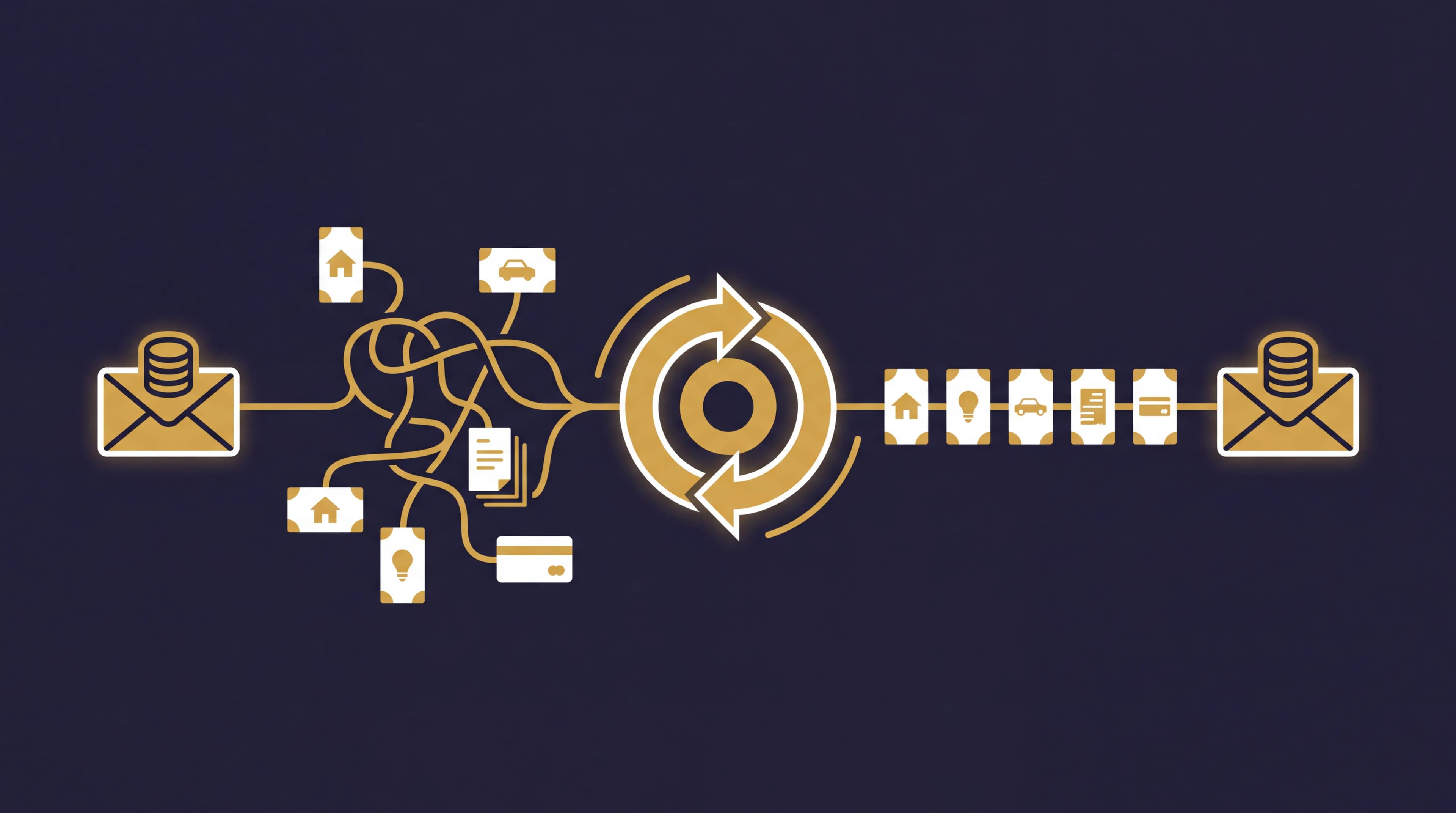
The Budget Pivot: How to Align Bill Due Dates with Your Paycheck
You sit down to pay a utility bill. You know you make enough money to cover it. But right now, on the fourteenth of the month, your checking account is practically empty. Your next paycheck does not hit until the fifteenth. You are stuck deciding whether to pay late, take a hit to your credit, or risk an overdraft fee.
This is a cash flow problem. Cash flow — the timing of when money flows into and out of your bank account. How do you align bill due dates with your paycheck? You align bill due dates with your paycheck by mapping out your pay schedule, identifying cash flow bottlenecks, and contacting your service providers to move your payment deadlines three to four days after your income clears. The timing of your money matters just as much as the amount.
Aligning your bill due dates with your paycheck timing is a simple but incredibly effective strategy for reducing financial stress. When your income and your expenses operate on two completely different schedules, you end up feeling broke even when you are earning a good salary. Fixing this misalignment is what I call the budget pivot.
Why Tracking Your Spending Is Not Enough
Tracking your spending is not enough if your bill due dates do not match your income schedule. A lot of people feel guilty when they struggle to pay their bills. They assume they are just bad at managing money. The data tells a very different story.
According to Debt.com (2024), 60 percent of 1,000 surveyed Americans reported living paycheck to paycheck. That number is up from 50 percent in both 2022 and 2023. What is fascinating is that 90 percent of these same people say they now use a formal budget, compared with just 70 percent seven years earlier.
People are tracking their income and expenses more than ever. The math on paper might say they have enough money. But in reality, they still feel like they have zero breathing room. If you want to understand why middle-income millennials live paycheck to paycheck, you have to look at cash flow timing.
According to Bankrate (2024), about one-third of roughly 2,400 surveyed U.S. workers would be immediately unable to cover ongoing living expenses if their income suddenly stopped. While lower-income workers feel this the most, middle-income households are increasingly falling behind on routine expenses like food, housing, and car payments.
The Federal Reserve provides even more concrete evidence. According to the Federal Reserve (2024), 17 percent of U.S. adults did not pay all their bills in full in the month prior to their Survey of Household Economics and Decisionmaking (SHED). For adults with family incomes below $25,000, that number jumped to 34 percent.
The Fed also noted that 11 percent of adults struggled to pay bills because their income varied. If you are a gig worker, an hourly employee, or someone who relies on commissions, your pay schedule fluctuates. When a variable income collides with fixed bill due dates, you are going to experience shortfalls.
The bottom line: A budget only works if your cash flow timing aligns with your actual pay schedule.
The Heavy Weight of Housing and Utilities
Housing and utility bills are the heaviest burdens on your cash flow because they are large, inflexible, and carry steep penalties for late payments. To fix your cash flow, you have to look at your biggest expenses first. For almost everyone, that means housing.
According to the U.S. Bureau of Labor Statistics (2024), average annual expenditures for consumer units were $78,535, with housing remaining the largest single category at $26,266. That means housing accounts for 33.4 cents of every dollar spent by the average consumer.
Because housing takes up a third of your budget, it dictates how the rest of your month flows. Rent and mortgage payments are usually due on the first of the month. They are large, inflexible, and completely unforgiving if you miss the date. This leaves you juggling your variable bills (like credit cards, subscriptions, and utilities) to match the timing of your bi-weekly or semi-monthly paychecks.
The High Cost of Rent and Utility Late Fees
When you fail to juggle perfectly, it gets expensive. According to the Consumer Financial Protection Bureau (2024), 14 percent of renters incurred a late fee in the previous twelve months. At its peak in February 2023, that number was 23 percent.
The average rent late fee sits around $84. If your payment bounces because your paycheck has not cleared yet, you might also get hit with a non-sufficient funds (NSF) fee, which averages about $40. The CFPB noted that almost 60 percent of renters who incur a late fee will experience two or more within a year. About 42 percent get hit again the very next month. A single scheduling mistake can trap you in a cycle of repeated penalties.
Utilities are another major pain point. In the Federal Reserve SHED report, the most commonly unpaid bills were water, gas, or electric (cited by 5 percent of adults) and phone, internet, or cable bills (also 5 percent). These are essential services. If your internet gets cut off, you might not be able to work. But because their due dates are often assigned randomly when you open the account, they rarely line up with your payday.
Here's what this means: Because you cannot easily change your rent due date, you must shift your smaller, flexible utility bills to accommodate it.
Credit Card Late Fees and the Timing Trap
Missing a credit card due date by even a few hours can trigger expensive late fees, making payment timing critical. If you are struggling with cash flow, you might want to read up on what to do when you can't pay your credit card minimums. But even if you have the money, missing the due date by just a few hours will cost you.
According to the Consumer Financial Protection Bureau (2022), major credit card issuers charged consumers over $14 billion in late fees. Since 2010, average late fees for major issuers have climbed from $23 to $32.
In early 2024, the CFPB finalized a rule to cap typical credit card late fees at $8 for large issuers. They estimated this would save American families over $10 billion a year. However, according to the Congressional Research Service (2025), a federal district court vacated the rule to cap fees, meaning those $32 late fees are still very much a reality for consumers today.
You also have to pay attention to the clock. Under Regulation Z, which implements the Truth in Lending Act, credit card companies generally cannot treat a payment as late if it is received by 5 p.m. on the due date. But "received" is the key word. If you mail a check or if your online payment takes two days to process, you could be charged a fee even if you hit the pay button on time. If your paycheck clears on Friday afternoon, but your credit card is due on Friday at 5 p.m., you have almost zero margin for error.
The bottom line: You must schedule your credit card payments to clear well before the 5 p.m. cutoff on your due date to avoid costly penalties.
Autopay: A Helpful Tool or a Hidden Risk?
Autopay is a helpful convenience tool, but it becomes a hidden risk when your automated drafts do not align with your paycheck deposits. To avoid these fees, a lot of financial advice tells you to just put everything on autopay. Digital bill-pay tools are incredibly popular.
According to the American Public Power Association (2023), autopay adoption for utilities reached about 47 percent. Most people (78 percent) reported having no issues with it. Autopay is great for making sure you do not forget a bill. But if your cash flow is tight, autopay can be dangerous.
If your electricity bill is set to auto-draft on the twelfth, but you do not get paid until the fifteenth, autopay will just blindly pull the money. This can trigger an overdraft fee at your bank or a returned payment fee from the utility company. Suddenly, a convenience tool is costing you $35 a month.
This is also a bigger challenge for the unbanked. According to the Federal Reserve (2024), 6 percent of adults were unbanked, making bill timing even more difficult. The FDIC regularly surveys how these households pay bills, knowing that relying on prepaid cards or cash makes timing even more difficult. If you have to physically buy a money order and mail it, you need your income to arrive days before the bill is actually due.
Here's what this means: Only use autopay if you have a cash buffer or if you have successfully aligned your auto-draft dates with your pay schedule.
How Pay Frequency Messes With Your Mind
Getting paid more frequently can actually increase financial distress because it misaligns with monthly billing cycles. It is easy to assume that getting paid more frequently makes budgeting easier. If you get paid every week, you always have fresh cash coming in, right?
Academic research says otherwise. A 2021 study published in the Journal of Public Economics looked at granular data from over 150,000 households to see how paycheck frequency affects debt and financial hardship. According to the Journal of Public Economics (2021), receiving income more frequently (like weekly pay) reduces credit card borrowing in the middle of the week but actually increases overall signs of financial distress.
Why does this happen? Because your biggest bills (like rent or a mortgage) are due once a month. If you are paid monthly, your income and your biggest expense happen at the exact same time. If you are paid weekly, you have to hold onto a portion of your income for three or four weeks to make sure you have enough for rent on the first. Human nature makes it very tempting to spend that money on smaller things throughout the month.
When your pay cycle is completely out of sync with your bill cycle, the probability of a cash shortfall goes up. This is why you need to actively manage your dates, not just your dollars.
The bottom line: Weekly or bi-weekly paychecks require active cash flow management to ensure you have enough saved for large monthly bills like rent.
How to Execute the Budget Pivot
Executing the budget pivot requires mapping out your pay schedule and actively negotiating new due dates with your service providers. The good news is that you have more control over your bill due dates than you think. Government agencies actually encourage consumers to negotiate these dates. The CFPB offers a specific framework for this in their consumer education materials.
Here is how you can execute a budget pivot to align your cash flow.
First, you need to map out your month. If you have never done this, take a look at our guide on how to build your first budget in 30 minutes. Grab a piece of paper or open a spreadsheet. Write down the exact dates you expect to get paid this month.
Next, list every single recurring bill you have. Write down the name of the bill, the typical amount, and the current due date.
Now, compare the two lists. You are looking for danger zones. Danger zone — any period where a large cluster of bills is due right before a payday, or when your account balance typically drops below $100.
Negotiating New Bill Due Dates
Once you identify the bills causing the bottleneck, you are going to change their due dates. Most credit card companies, utility providers, and cell phone carriers will let you pick a new due date if you just ask.
Call their customer service line or log into your online account. You can say something simple like: "My current due date is the fourteenth, but I get paid on the fifteenth. I would like to move my due date to the seventeenth so I can ensure my payment always clears on time."
Move your bills so they fall three to four days after your paycheck clears. This gives your bank enough time to process your direct deposit. If you get paid on the first and the fifteenth, try to group half of your bills around the fourth, and the other half around the eighteenth.
Keep in mind that landlords and mortgage lenders are usually less flexible. You probably cannot move your rent date. Instead, move your flexible bills (credit cards, internet, streaming services) away from the first of the month. Clear out the first week of the month so your rent check is the only thing coming out of your account.
Here's what this means: By moving flexible bill due dates three to four days after your paycheck clears, you create a permanent safety net against overdrafts and late fees.
Common Questions
How do I ask to change my bill due date?
You ask to change your bill due date by calling customer service or logging into your online account settings. Simply explain that you want to align your payment deadline with your pay schedule to ensure on-time payments. Most credit card and utility companies will happily accommodate this request.
What bills cannot have their due dates changed?
Rent and mortgage payments typically cannot have their due dates changed, as they are strictly tied to the first of the month. Car loans and personal loans may also have rigid terms depending on the lender. For these fixed expenses, you should adjust your other flexible bills around them.
Why is my bank charging an overdraft fee on autopay?
Your bank is charging an overdraft fee because your autopay triggered before your paycheck cleared your checking account. This happens when your bill due dates are misaligned with your income schedule. To fix this, move your auto-draft dates to three or four days after your payday.
When is the best time of the month to pay bills?
The best time of the month to pay bills is three to four days after your paycheck is directly deposited. This buffer ensures the funds have fully cleared and are available for withdrawal. Grouping your bills around your specific paydays eliminates the stress of a low balance.
Your One Next Step
Look at your bank statements from the last three months and find the one bill that consistently stresses you out because of when it is due. Log into that account online today and look for the option to change your payment date. If you cannot find it online, call the customer service number on your statement. Move that single bill to a date three days after your next payday. A five-minute phone call can permanently fix a cash flow bottleneck.
Listen to this article
AI-generated audio · Voices by ElevenLabs
Get smarter about money
One practical tip per week. No spam, no hype — just clear steps toward financial progress.

Sammy Dynamo
Software Engineer | CS Student | Technopreneur, Dyxium Inc
Related Articles
10 min read
BudgetingDynamic Budgeting: Adjusting When Rent and Gas Spike
Dynamic budgeting helps you adapt when rent and gas prices spike. Learn how to adjust your...
Sammy Dynamo
12 min read
BudgetingLease Renewal Math: Accept a Rent Hike or Move in 2026?
Facing a rent hike? Use this lease renewal math to decide if you should stay or...
Sammy Dynamo
10 min read
BudgetingRent is 40% of Your Income? How to Budget and Survive
When rent is 40% of your income, traditional financial advice fails. Learn how to adapt your...
Sammy Dynamo