Lease Renewal Math: Accept a Rent Hike or Move in 2026?
Lease Renewal Math: Accept a Rent Hike or Move in 2026?
That piece of paper taped to your door or sitting in your email inbox always brings a knot to your stomach. Your lease is up for renewal, and your landlord wants more money.
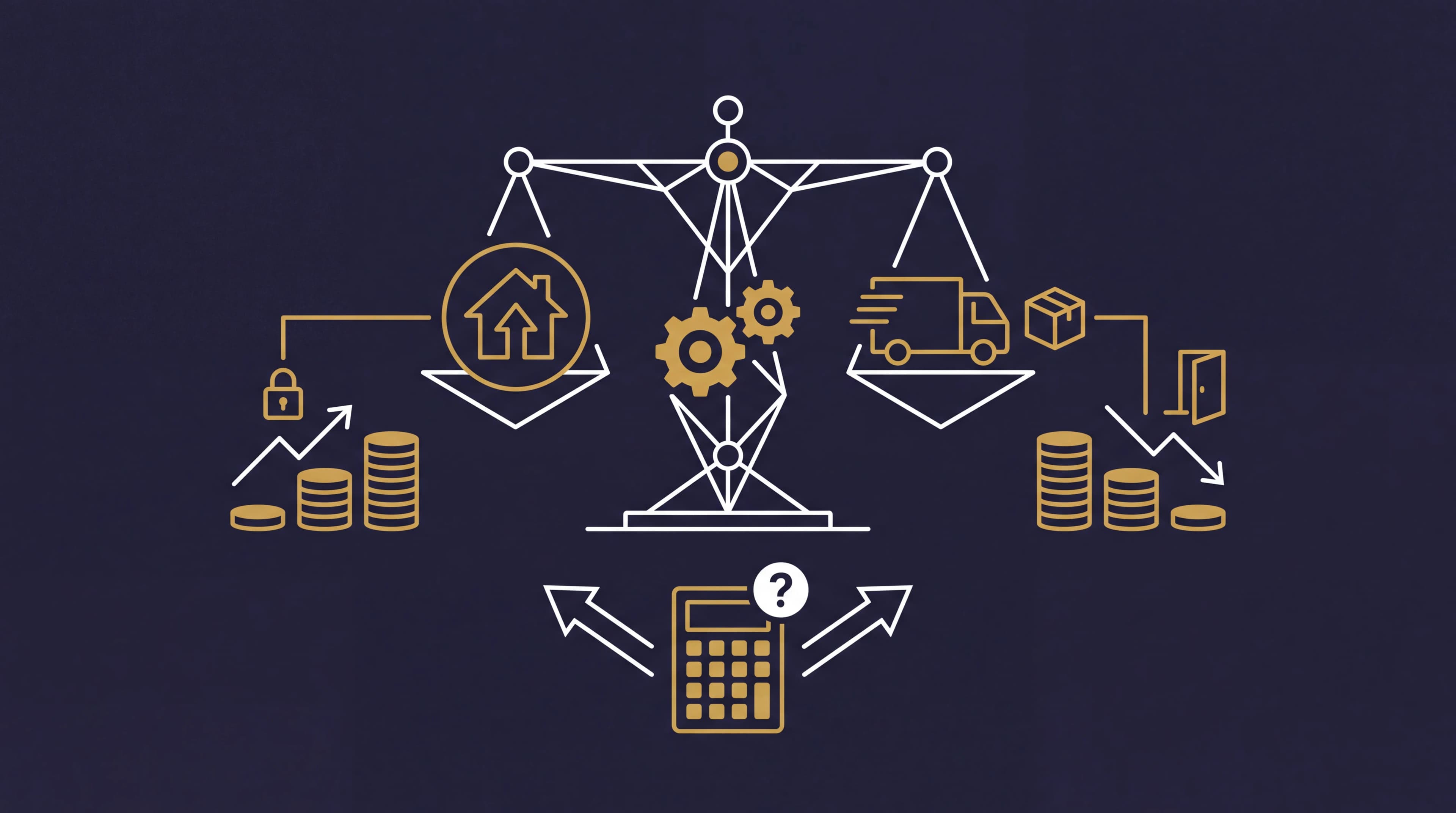
Should you accept a rent hike or move? The answer depends entirely on your break-even point—the exact number of months it takes for a new, cheaper apartment's savings to cover your upfront moving costs. Deciding whether to stay and swallow the higher cost or pack up your life and move is rarely a simple choice. It feels deeply personal, but you are actually participating in a massive national math problem. Millions of renters are facing the exact same dilemma this year as they navigate a lease renewal — the process of extending your current rental agreement, usually accompanied by a change in monthly rent.
To make the best decision for your budget, you have to separate your frustration from the numbers. You need to look at what the housing market is actually doing in 2026, understand the hidden costs of relocating, and calculate your exact break-even point.
Here is how to run the math on your lease renewal so you can make a confident, financially sound choice.
The Reality of Rent Prices in 2026
Rent prices are rising faster than wages, making lease renewals a major financial hurdle for tenants in 2026. If you feel like your rent is taking up more of your paycheck than it used to, you are not imagining things. The data backs you up completely.
According to the Federal Reserve (2024), the median rent paid by U.S. renters reached $1,200 per month. That same survey noted that rents have been increasing by roughly 10 percent per year since 2022.
A 10 percent increase on a $1,200 apartment is an extra $120 a month. Over a year, that is $1,440 out of your pocket. For a young professional trying to build an emergency fund or pay down student loans, that is a massive hit to your monthly cash flow.
The longer-term picture is even more striking. According to Zillow (2024), typical U.S. rents rose 29 percent over a recent three-year period. This means that if you have been in the same apartment since the early 2020s, you are likely feeling the compounding weight of multiple consecutive hikes.
The type of home you rent also matters. According to Fortune (2024), rents for single-family homes are about 41 percent above their pre-pandemic levels. Multifamily units (like standard apartment buildings) are up about 26 percent.
The bottom line: If you are renting a house with a yard or splitting a single-family home with roommates, you are sitting in the most inflated segment of the rental market.
What the Headlines Get Wrong About Rent
National inflation headlines rarely reflect the actual rent prices in your specific neighborhood. You might be watching the news and hearing that inflation is cooling down. So why is your landlord still asking for a massive rent increase?
The answer comes down to how the government measures housing costs. The Bureau of Labor Statistics tracks the Consumer Price Index (CPI) — a measure of the average change over time in the prices paid by urban consumers for a market basket of consumer goods and services. This is the main number people use when they talk about inflation.
Shelter is a massive part of the CPI. It makes up about 35.6 percent of the entire inflation basket. But the government measures this using two main indexes. One is the rent of primary residence for actual renters. The other is called owners' equivalent rent (OER) — an estimate of the amount of rent that would have to be paid in order to substitute a currently owned house for an equivalent rental property.
Because OER is an estimate, and because the government uses a rolling sample of rental units to calculate these numbers, official inflation data often lags behind reality. It smooths out the sharp spikes and sudden drops in the market.
Here's what this means: Your landlord is not looking at the CPI when they price your renewal. They are looking at what the building down the street is charging for a similar unit right now.
The 30 Percent Rule and Your Budget
Spending more than a third of your income on rent is now the standard reality for millions of Americans. Financial planners have long used a standard rule of thumb for housing: you should aim to spend no more than 30 percent of your gross income on rent and utilities.
If you spend more than 30 percent, you are considered cost-burdened — spending more than 30 percent of your gross income on housing and utilities. Unfortunately, crossing this threshold is no longer rare.
According to the Harvard Joint Center for Housing Studies (2024), half of all U.S. renter households are now cost-burdened. That is roughly 22.6 million households spending more than 30 percent of their income on housing.
Even worse, 12.1 million of those households are severely cost-burdened. This means they spend more than half of their income just to keep a roof over their heads. If a rent hike pushes you into this territory, you might need to seriously rethink your living situation. You can read more about how to budget when rent is 40% of your income in our survival guide.
Do not expect a government safety net to catch you if rent gets too high. According to Zillow (2026), there are about 2.79 million housing vouchers in circulation, but there are 21.4 million cost-burdened renter households. The Department of Housing and Urban Development notes that only about one-quarter of income-eligible renters actually receive assistance.
The bottom line: You cannot rely on government assistance if you become cost-burdened; your personal budget and negotiation skills are your only safety net.
Why Buying a House Is Not a Quick Fix
Buying a home is rarely a cost-effective short-term solution to avoid a rent increase. When faced with a steep rent hike, a very common reaction is frustration followed by a declaration: "I am just going to buy a house."
It is a completely understandable thought. Why pay someone else's mortgage when you could pay your own? But when you run the actual numbers in 2026, buying a home out of spite is usually a terrible financial move.
Despite rising rents, leasing remains significantly cheaper than buying in almost every major market. According to Bankrate (2024), typical rents are about 36.6 percent cheaper than median monthly mortgage payments nationally.
In major metropolitan areas, the gap is even wider. A related Bankrate study looked at the 50 largest U.S. metros and found it was cheaper to rent than to pay a mortgage in every single one of them. In high-cost areas like the San Francisco Bay Area, median ownership costs were estimated at 180.7 percent higher than renting. In Seattle, owning was 123 percent more expensive.
According to the Federal Reserve (2024), among homeowners with mortgages, the median monthly payment was about $1,500, compared to the $1,200 median rent. And that mortgage number does not include the thousands of dollars you need for a down payment, closing costs, property taxes, and inevitable maintenance repairs.
Here's what this means: Leasing remains significantly cheaper than buying a home in almost every major U.S. market. If you are considering making the leap to homeownership, you need to base that decision on a long-term strategy. For a deeper dive into this comparison, check out our guide on whether to buy or rent in 2026.
The Hidden Financial Costs of Moving
Relocating to a cheaper apartment involves significant hidden costs that can wipe out your monthly rent savings. If staying is expensive and buying is out of the question, moving to a cheaper apartment seems like the logical next step. But moving is never free.
Before you reject your landlord's renewal offer, you have to calculate the upfront costs of relocating. According to Move.org (2024), people spent anywhere from $1,500 to $65,000 on moves.
While a local move for a young professional will sit at the very bottom of that range, the expenses still add up fast. If you hire professional movers for a local, short-distance move, you can expect to pay between $1,000 and $2,500. Even if you rent a truck and bribe your friends with pizza, you are still looking at several hundred dollars.
Transition Fees and Overlapping Rent
The physical move is only part of the expense. You also have to account for transition costs.
First, there is the security deposit. You will likely need to put down a new deposit before you get your old one back. This ties up a significant amount of your cash for at least a month.
Second, there are application fees, administrative fees, and sometimes broker fees depending on your city. These non-refundable costs can easily add up to $100 to $500.
Finally, there is overlapping rent — the expense of paying for two living spaces simultaneously when lease dates do not perfectly align. Leases rarely line up perfectly. You will often have to pay for a few days or even a full week of rent at both places to give yourself time to move and clean the old unit.
The bottom line: The upfront costs of moving, including deposits and overlapping rent, often exceed $1,000 even for local relocations.
How to Run Your Own Lease Renewal Math
Calculating your break-even point is the only way to objectively decide between renewing your lease or moving. Your break-even point — the exact number of months it takes for the monthly savings of a new apartment to cover the upfront costs of moving — is the most important metric in this decision.
A Real-World Break-Even Calculation
Let us walk through a realistic example. Imagine you currently pay $1,500 a month. Your landlord wants to raise your rent by $150 to $1,650 a month for the next year.
You look online and find a similar apartment across town for $1,550 a month. Moving there would save you $100 a month compared to your landlord's new offer.
Now, let us calculate the cost of moving to that new apartment:
- Movers or truck rental: $800
- Application and admin fees: $150
- Overlapping rent (5 days): $250
- Cleaning supplies and boxes: $100
- Total moving cost: $1,300
Next, divide your total moving cost by your monthly savings.
$1,300 divided by $100 equals 13.
It will take you 13 months to break even on this move. If you sign a standard 12-month lease at the new place, you will actually lose money by moving. You would be financially better off staying in your current apartment and accepting the $150 rent hike.
This math is exactly why landlords feel confident raising rents. They know the financial friction of moving works in their favor.
However, if you find a place that is $250 cheaper per month, your break-even point drops to just over 5 months. In that scenario, moving is a clear mathematical win.
Here's what this means: If your break-even point is longer than your new lease term, you will lose money by moving. Before you run this math, it is always worth trying to lower your current landlord's offer. You can learn exactly what to say in our guide on how to negotiate rent down with proven scripts.
The Psychological Cost of Packing Up
The mental and physical exhaustion of moving is a hidden cost that must be weighed against financial savings. Numbers on a spreadsheet are crucial, but they are not the only factor in your decision. You also have to weigh the behavioral and psychological costs of moving.
According to the U.S. Census Bureau (2024), overall geographic mobility rates have declined in recent decades. People are moving less frequently than they used to. Part of this is due to housing costs, but part of it is simply because moving is exhausting.
When you move, you disrupt your established routines. You might change your commute time, which impacts your daily stress levels and transportation costs. You have to update your address on every account, figure out a new grocery store, and possibly move away from your local social network.
The Federal Reserve's survey data shows that renters frequently cite financial constraints as their primary source of housing stress. But trading one type of stress (a higher rent payment) for another (the chaos of moving and a longer commute) is a delicate balancing act.
If the math shows that moving will only save you a few hundred dollars over the course of a year, you have to ask yourself a simple question. Is your time, energy, and peace of mind worth more than that?
The bottom line: Paying a slight premium to avoid the stress and disruption of moving is a valid financial choice for many renters. On the other hand, if a rent hike pushes your housing costs well past 30 percent of your income, the stress of a tight budget will quickly outweigh the temporary stress of moving.
Common Questions About Lease Renewals
How much can a landlord raise rent in 2026?
A landlord can raise rent by any amount unless you live in a city or state with rent control laws. Always check your local tenant rights, as some municipalities cap annual increases at a specific percentage, typically between 3% and 10%.
When should I negotiate my lease renewal?
You should start negotiating your lease renewal at least 60 days before your current lease expires. This gives you enough time to research local market prices, present a counteroffer, and make moving arrangements if the landlord refuses to budge.
What is a good break-even point for moving?
A good break-even point for moving is anything under 9 months on a standard 12-month lease. If it takes longer than that to recoup your moving costs through monthly rent savings, you are generally better off staying in your current apartment.
Why is my rent going up when inflation is down?
Your rent is going up because landlords price units based on current local market demand, not national inflation indexes. Official inflation data also uses lagging indicators, meaning it often takes months or years for cooling national inflation to reflect in local housing markets.
Your One Next Step
Open a blank spreadsheet or grab a piece of paper and calculate your personal break-even point today. Write down your landlord's proposed annual increase, estimate your total moving costs (including overlapping rent and fees), and figure out exactly how much cheaper a new apartment needs to be to make moving worth the effort. Having this single number in mind will make your decision entirely objective.
Listen to this article
AI-generated audio · Voices by ElevenLabs
Get smarter about money
One practical tip per week. No spam, no hype — just clear steps toward financial progress.

Sammy Dynamo
Software Engineer | CS Student | Technopreneur, Dyxium Inc
Related Articles
10 min read
BudgetingDynamic Budgeting: Adjusting When Rent and Gas Spike
Dynamic budgeting helps you adapt when rent and gas prices spike. Learn how to adjust your...
Sammy Dynamo
10 min read
BudgetingRent is 40% of Your Income? How to Budget and Survive
When rent is 40% of your income, traditional financial advice fails. Learn how to adapt your...
Sammy Dynamo
11 min read
BudgetingBare-Bones Budget for Layoffs: Find Your Survival Number
A bare-bones budget is your ultimate defense against a layoff scare. Learn how to calculate your...
Sammy Dynamo