Living outside the United States does not automatically rule out a US bank account. Your options depend on citizenship, residence, and each institution's rules.
American Citizens Abroad, or ACA, describes an online path to State Department Federal Credit Union, or SDFCU, for US citizens abroad. That path allows foreign addresses, but SDFCU controls approval. It is not a general offer to every noncitizen living overseas.
If you are a foreign national abroad, ask institutions specifically about nonresident applicants. Acceptance of a foreign passport or an Individual Taxpayer Identification Number, known as an ITIN, does not establish eligibility by itself.
Match the account route to your status
Before comparing accounts, separate where you live from your citizenship and US tax status. Institutions may use each detail when deciding whether they can serve you.
If you are a US citizen living overseas, the ACA partnership addresses a specific problem. It provides a path to apply without a US address. It is not a promise of acceptance.
If you are not a US citizen, the partnership described here does not establish your eligibility. Ask SDFCU whether another membership route applies to your citizenship and country of residence.
If you are moving to the United States, your options may differ from those available while remaining abroad. A branch that accepts noncitizens with local addresses may not accept applications from overseas.
Banking access figures need the same care. The Federal Deposit Insurance Corporation found that 4.2 percent of US households did not have a checking or savings account at a bank or credit union in 2023. That finding describes households inside the United States, not approval odds for applicants abroad.
An institution's refusal may reflect its policies for overseas customers. Another institution may have different requirements. Describe your circumstances accurately. Do not change details to fit a form.
Write down the job the account needs to do, such as receiving pay or covering US bills. If you only need occasional transfers, compare that need with the work and cost of maintaining another account.
Check membership before paying ACA dues
ACA describes its SDFCU arrangement as available to eligible US citizens abroad, including those without a US residence or mailing address. Its materials say the application can be completed online.
ACA membership is a prerequisite for the partnership route described in its materials. Joining ACA and receiving approval from SDFCU are separate decisions, and ACA says its dues are nonrefundable.
Before paying dues, request an eligibility answer for your circumstances. Include your country of residence and citizenship. Do not ask only whether SDFCU accepts people overseas.
Use this short contact checklist:
- State your citizenship and country of residence.
- Ask whether your actual foreign address is acceptable.
- Request the current document list and dated fee schedule.
- Ask which membership route applies to you.
An association membership can provide a route to credit union eligibility, but SDFCU still decides whether to approve the application. Do not treat payment to ACA as payment for an approved account.
SDFCU is a credit union, so membership forms part of the relationship. Ask whether a membership share deposit is required and how it differs from a fee.
Separate basic account access from optional products. Approval for a deposit account does not establish approval for a credit card or eligibility for a retirement account.
If you need a debit card abroad, ask whether it can be delivered to your country. Also ask how replacement cards are handled, since an account may be less useful if you cannot replace a missing card.
Keep the written response with the terms you review. If your country or address changes before applying, request an updated answer. Do not rely on the earlier response.
Build a document pack that matches
Once SDFCU has explained the route available to you, gather the documents it requests. Preparing a consistent set is more useful than collecting every identity document you own.
An unexpired passport can help establish identity, while an accepted address document supports where you live. Ask which documents SDFCU accepts and how recent they need to be.
A utility bill or lease may be acceptable, depending on the institution's rules. If your documents are not in English, ask whether translations or certified copies are required before paying for them.
Use your real residential address in fields that request it. A relative's address or mail forwarding service should not stand in for where you live unless the institution expressly permits that use.
Check the details across your documents before uploading them. Different spellings, missing apartment details, or an old address may lead to requests for an explanation.
Prepare the application pack with these checks:
- Match your legal name across the application and documents.
- Include every requested passport page.
- Keep document dates and address details readable.
- Ask how to explain legitimate differences between records.
A Social Security number is not the only identification number accepted across US banking. NerdWallet and Bankrate describe institutions that accept ITINs or alternative government identification, although individual policies differ.
That flexibility does not mean every applicant can skip a taxpayer identification number. A US citizen abroad should ask which taxpayer details SDFCU requires for that application.
If an institution requests an ITIN, review IRS eligibility before applying. The institution's request does not itself establish a qualifying tax reason to receive one.
Your address also does not determine your US tax status by itself. If you are a US citizen abroad, do not select a foreign-person tax form merely because you live overseas.
If your tax status is unclear, ask a qualified tax professional before signing a certification. Keep that decision separate from choosing the account that fits your banking needs.
Apply online without changing your details
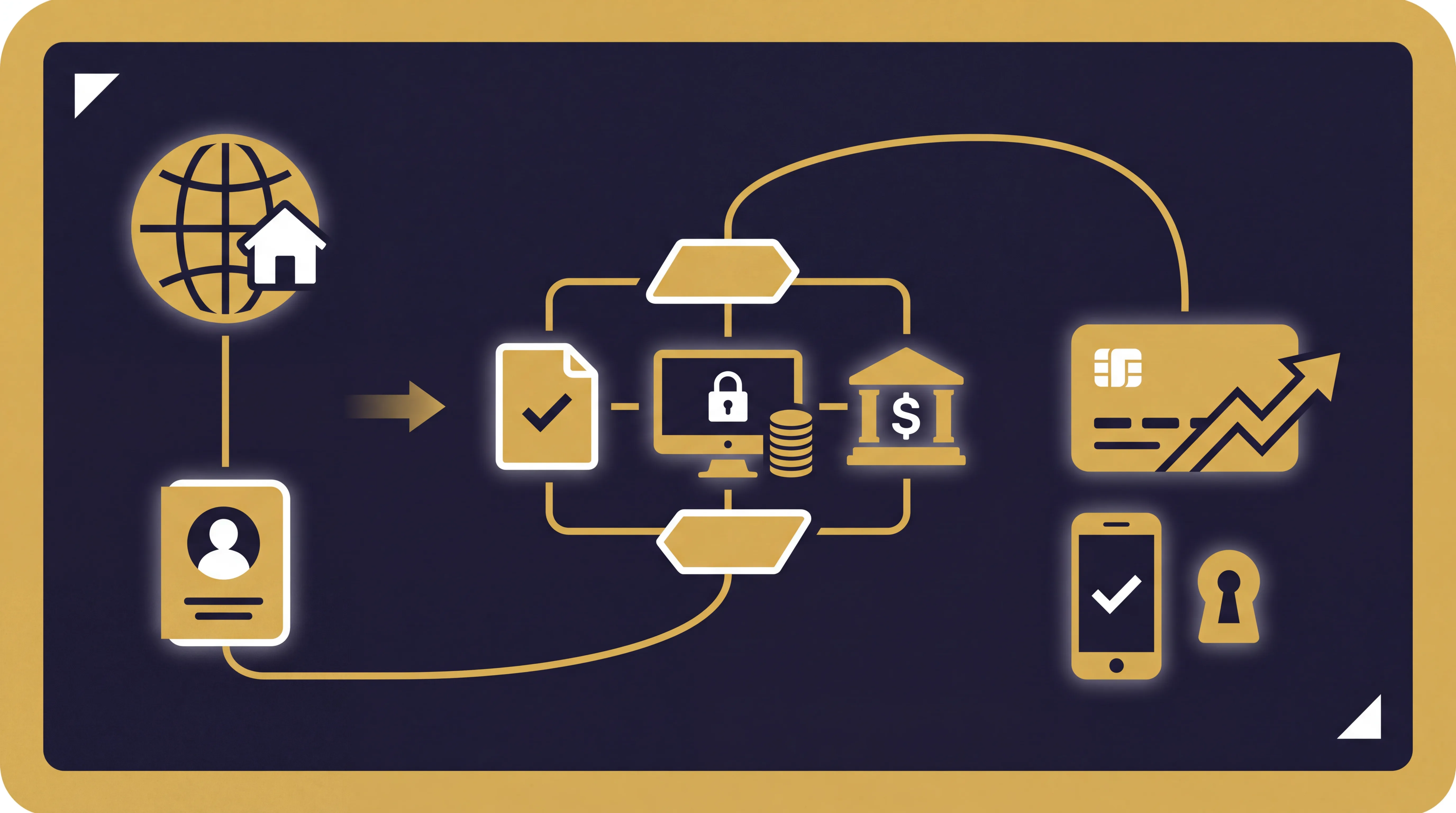
ACA describes an online application process for its SDFCU route. Remote opening still involves identity checks, and SDFCU may request more information before making a decision.
Begin through the official application instructions supplied by ACA and SDFCU. Avoid sending passports or tax documents to someone who contacts you unexpectedly and offers to complete the process.
If an application field does not fit your circumstances, pause and contact SDFCU. Entering a substitute address or identification number can create problems beyond the original form error.
The application may ask where your money comes from and how you expect to use the account. Describe the activity plainly and make sure your answer matches the account's intended purpose.
If you receive employment income, keep relevant employment or payment records available in case they are requested. If you plan to use the account for business receipts, ask whether the account permits that activity.
Save your application reference and copies of the information you submit. Use a secure storage method, especially when those files contain passport details or taxpayer information.
If the process stalls, ask what remains outstanding. A request for another document differs from a decision that your country or membership category is ineligible.
Do not pay for US travel solely because an online form fails. If a branch visit becomes necessary, request that branch's document requirements before booking anything.
Keep your existing banking arrangement working while the application is pending. Wait until the new account is open and usable before making it your only way to receive income.
Compare the cost of moving your money
An account that opens successfully can still be a poor fit for your transfers. Compare the full route from the sender to the final recipient. Do not look only at account maintenance fees.
Request a dated schedule covering the transactions you expect to make. If you need international transfers, ask about incoming charges, outgoing charges, intermediary deductions, and currency conversion costs.
Ask whether a US payer can send the payment type you expect to receive. Domestic electronic transfers and international wires can have different instructions and charges.
For example, suppose you plan to receive $800 in July 2026 and send $500 abroad that month. In this example, assume a $10 incoming fee and a $15 transfer fee for July 2026. Your account would retain $275: $800 minus $10 minus $500 minus $15.
These are illustrative planning inputs, not SDFCU charges. The recipient's final amount would also depend on currency conversion and any receiving fees.
Use the same method with the dated charges provided for your account. If a provider cannot state the recipient's final amount, identify which deductions remain uncertain before comparing offers.
The Federal Deposit Insurance Corporation found that 14.2 percent of US households were underbanked in 2023. Those households had accounts but also used certain nonbank services for core financial needs.
That category does not make every nonbank transfer service a poor choice. Compare the amount received, delivery time, and available support for your particular transfer.
If you regularly support relatives overseas, include those transfers in your spending plan. Geldzak's guide to supporting family abroad within your budget covers that wider decision.
Before sending a large balance, consider a small test transfer if the charges make that practical. Check both the amount leaving and the amount arriving before relying on the route for a major payment.
Keep the account usable from abroad
After approval, check access before moving recurring payments. Make sure you can sign in from your country and receive the security messages needed to use the account.
If your account relies on a phone number, ask what happens when that number changes. Set up supported recovery options before losing access to an old phone or SIM card.
Keep your residential address and tax certifications current when your circumstances change. If you move to another country, ask whether SDFCU can continue serving you there.
Review any conditions attached to the account, including balance requirements or inactivity rules. Use the current dated disclosures rather than a fee comparison saved before you applied.
Ask which deposits receive federal credit union share insurance and how account ownership affects coverage. Do not assume a payment app or investment product has the same protection as an insured deposit.
Holding dollars can serve a practical need if you have dollar expenses. If most of your bills are in another currency, exchange rate changes can alter how much local spending your balance covers.
Keep enough accessible money for bills in the country where you live, based on your needs and transfer times. A US account need not replace the local account you already use.
A deposit account does not, by itself, build a US borrowing history. If building credit is your goal, treat that as a separate decision with its own eligibility and costs.
Once the account is working, add it to your existing payment routine. Geldzak's guide to automating your finances explains how to organize recurring transfers around your bills.
If you have reporting duties in your country of residence, include the new account in your records. A qualified tax professional can help with obligations that depend on your citizenship and tax residence.
Sources
American Citizens Abroad's SDFCU account and membership materials describe the overseas application route, membership conditions, and SDFCU's approval role. Request current terms directly before applying or paying dues.
The Federal Deposit Insurance Corporation's National Survey of Unbanked and Underbanked Households supplies the household figures cited above. Those findings concern US households, not the likelihood of account approval from another country.
NerdWallet's guide to bank accounts for undocumented immigrants and Bankrate's guide for noncitizens explain common identification options. Their examples do not establish SDFCU eligibility for a particular applicant.
Get your eligibility answer in writing
If you are a US citizen abroad, begin by describing your circumstances to SDFCU before paying ACA dues. If you are not a US citizen, ask about another membership route. Do not assume the ACA partnership applies.
Keep the message short and specific. State your citizenship, country of residence and the payments you need to make or receive. Name the type of taxpayer ID you have (for example, SSN or ITIN), not the number.
Do not email full ID numbers or images of your ID. Send those only through SDFCU's official secure application.
ACA's application checklist lists a Social Security number, a residential address and a government-issued photo ID for the standard route. Its FAQ describes a narrower route for household or family members of an existing ACA member. Confirm that route's requirements with SDFCU before paying dues.
If banking is part of a wider move, account access sits alongside other financial arrangements you may need.
This week, send that eligibility message before paying dues or booking travel.